Tactixology
Tactixology

Tactical analysis

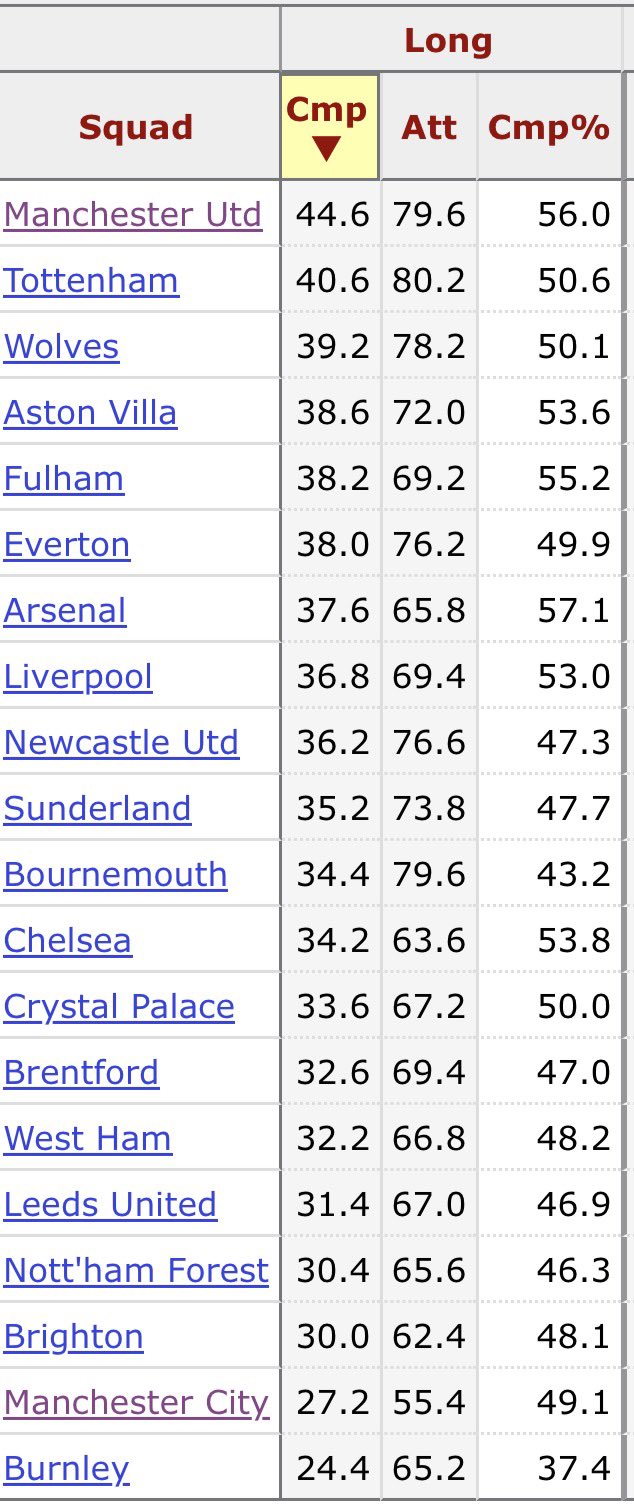
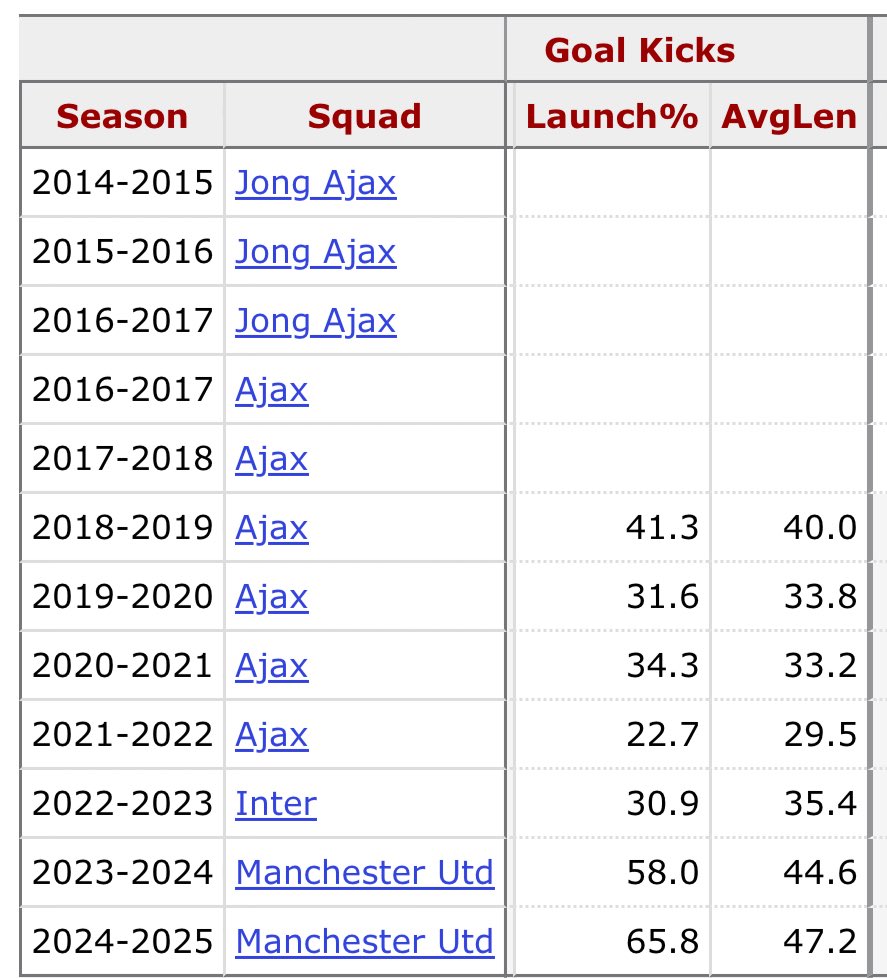
United gone long

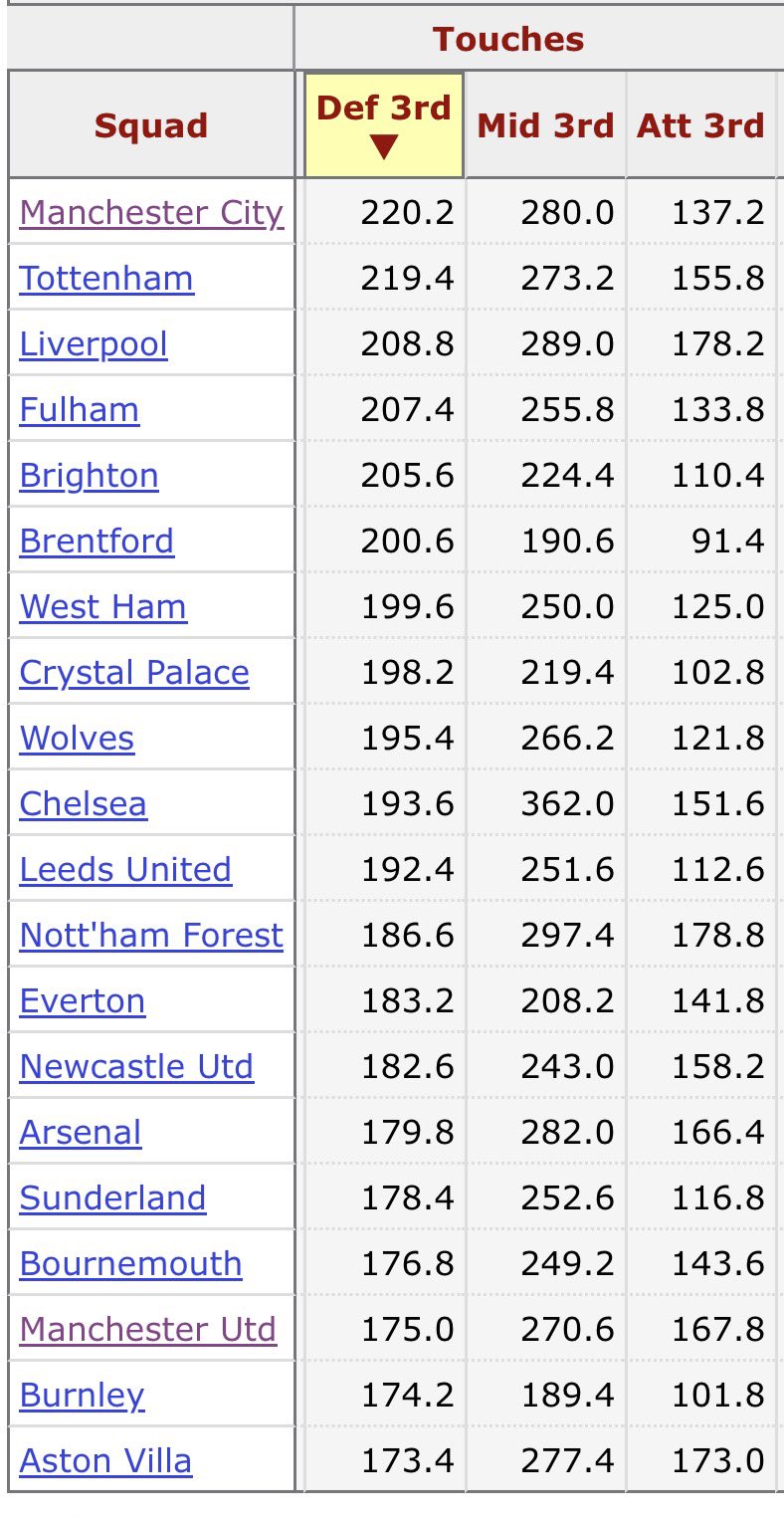
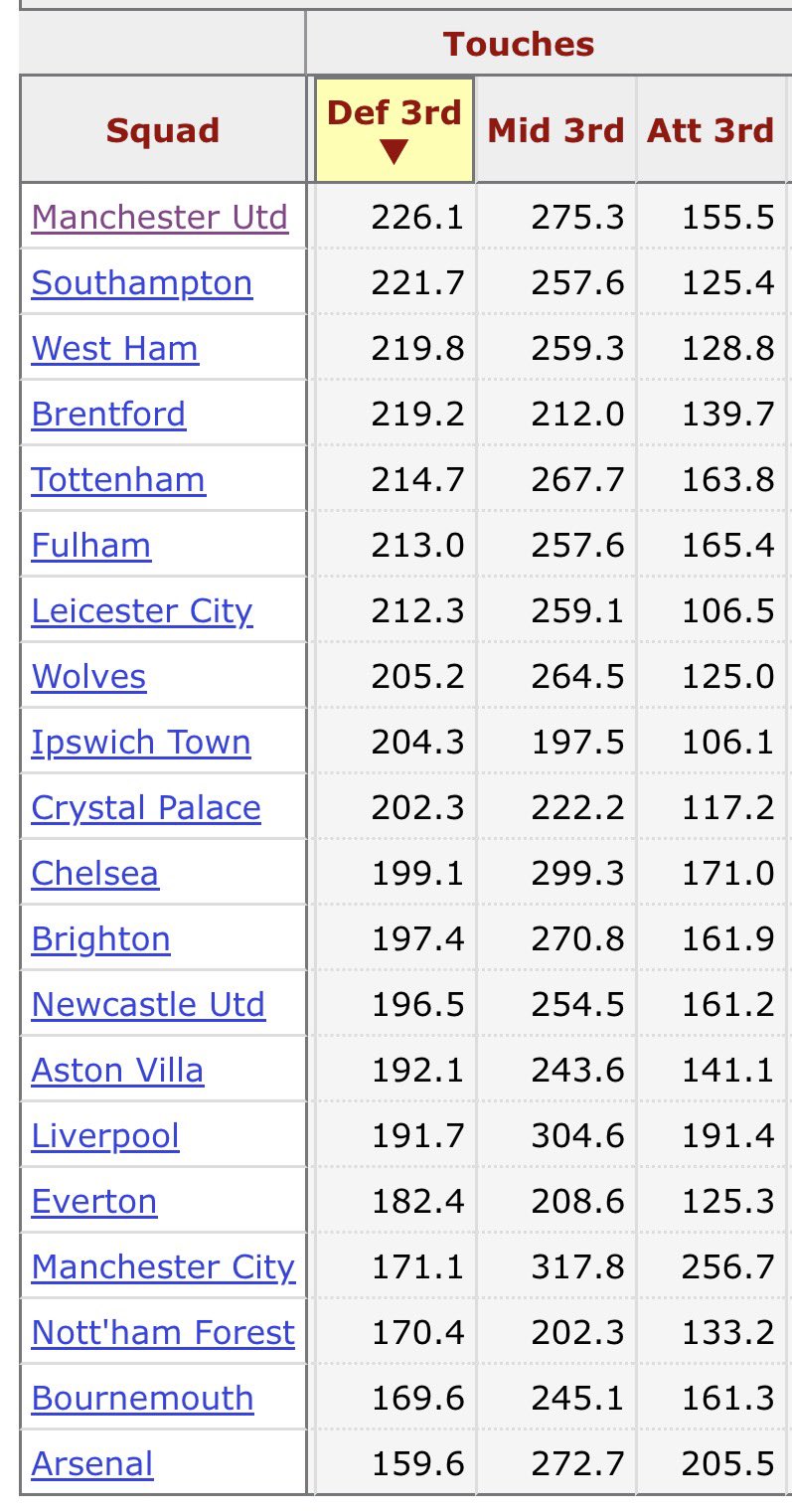
Long passes have doubled and own-third touches have collapsed: the numbers behind United's direct build-up, and its limits against compact blocks.

There’s a material difference this season in how Ruben Amorim has approached in-possession play generally and build-up specifically.

Is it a pragmatic adjustment due to the strength of sides we faced - or a profound change in Amorim’s game model?

Whereas last year United often tried to build and defend through retention, by keeping possession in own half and hoping for a progression opening, we’ve been substantially more proactive this season.

The intent has been to use the opposition’s high pressing and attacking against them, by going long and direct, usually from CBs to AMs, or from GK directly to forwards.

And it hasn’t just been about progressing, but also about minimizing risk: retention in our own 3rd last season often led to turnovers in very dangerous areas.

Is this a temporary tactic used to survive our rough opening schedule featuring Arsenal, City and Chelsea, or a more substantial change in how we build and progress?
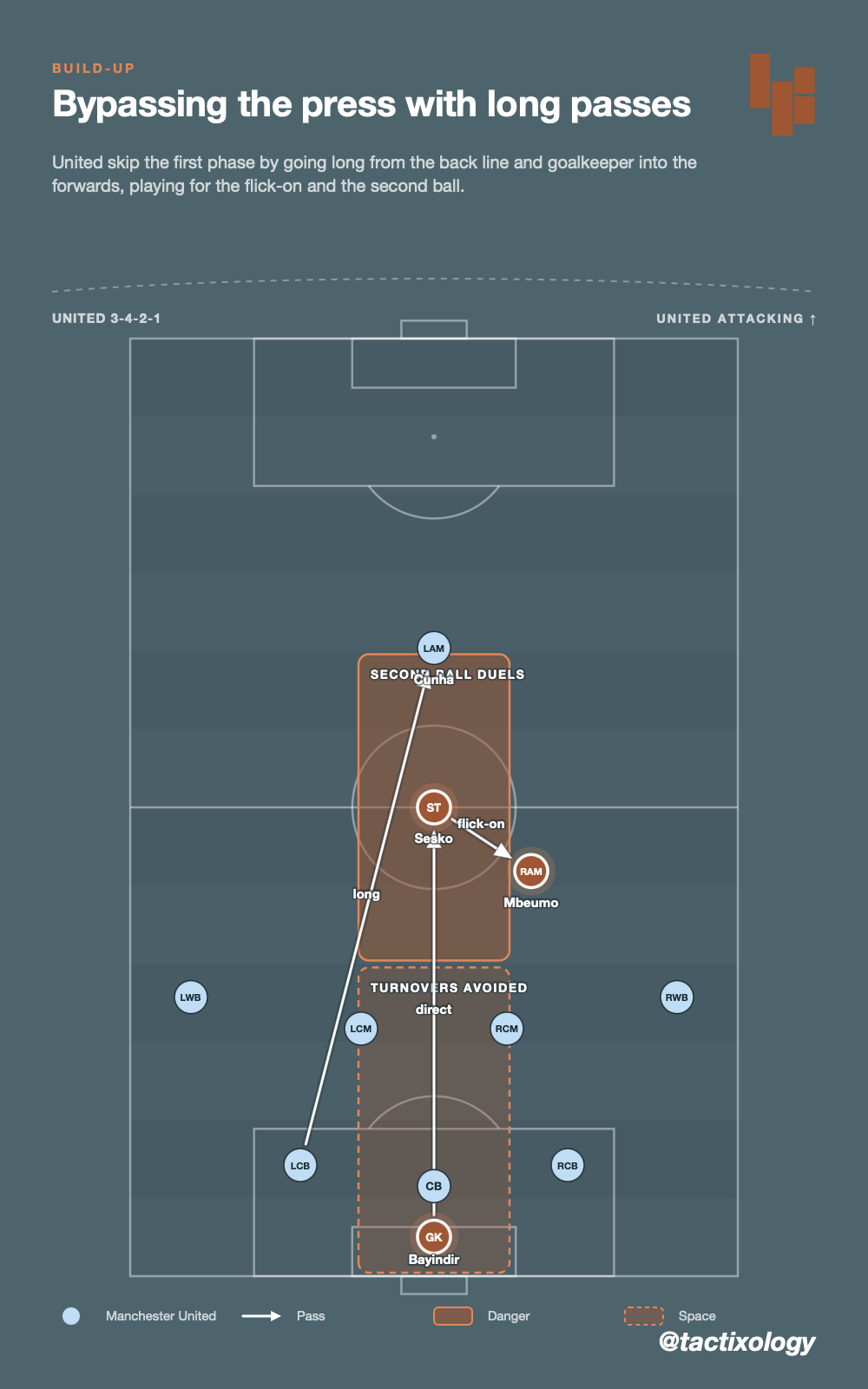
Tactical diagram: Bayindir goes long to Sesko, who flicks the ball on to Mbeumo, with United playing for the second ball in central midfield.
United skip the first phase by going long from the back line and goalkeeper into the forwards, playing for the flick-on and the second ball.


More importantly, is it an effective and sustainable way to win in the PL, especially against mid and low blocks?

Longform

Why do United managers fail?

From Van Gaal to Amorim, United have appointed managers to atone for the last one rather than to build the next thing.

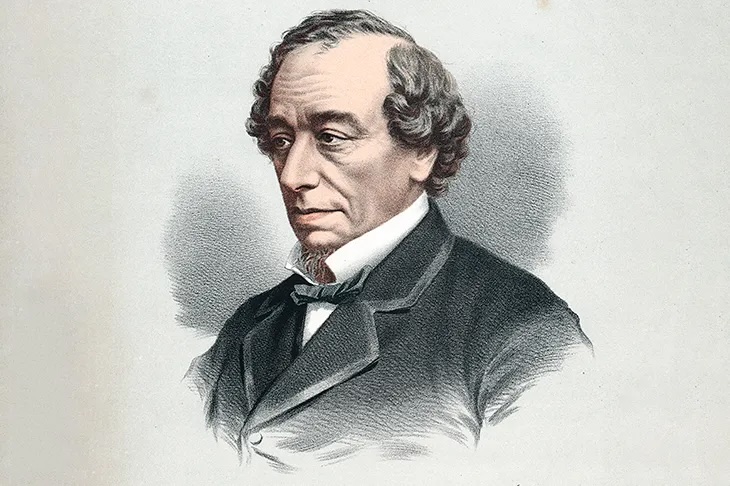
“All my successes have been built on my failures” - Benjamin Disraeli
Tinted nineteenth-century lithograph portrait of Benjamin Disraeli in a dark coat and bow tie.

There is, I believe, an underappreciated reason why post SAF-managers have all failed to have long, sustainable & frutiful tenures, chasing PL and UCL titles.

But in addition to that - or rather, as a product of that - United keep making the same mistake when selecting managers.

With every mangerial appointment, the club has been trying to correct the last guy’s sins and mistakes. If you analyze the picks carefully - as well as what was briefed to the media at the time - you’ll notice this clear & problemtaic trend.

It’s been an extremely, almost comically reactive approach.

Instead of thinking what the next person could bring to the table, how his ideas fit the squad, whether the game model can evolve, is it a match for the PL, it’s always been about atoning for the last person in charge.

All of our success will be built on all failures. Every new manager was a reactive attempt to correct the biggest flaw, real or perceived, that the last manager had.

How each appointment answered the last

As Moyes was nearing his end, the general thinking was: we went with a smaller-club manager with little relevant experience, and that needs to be corrected.

Match analysis

Are Grimsby better than Arsenal?

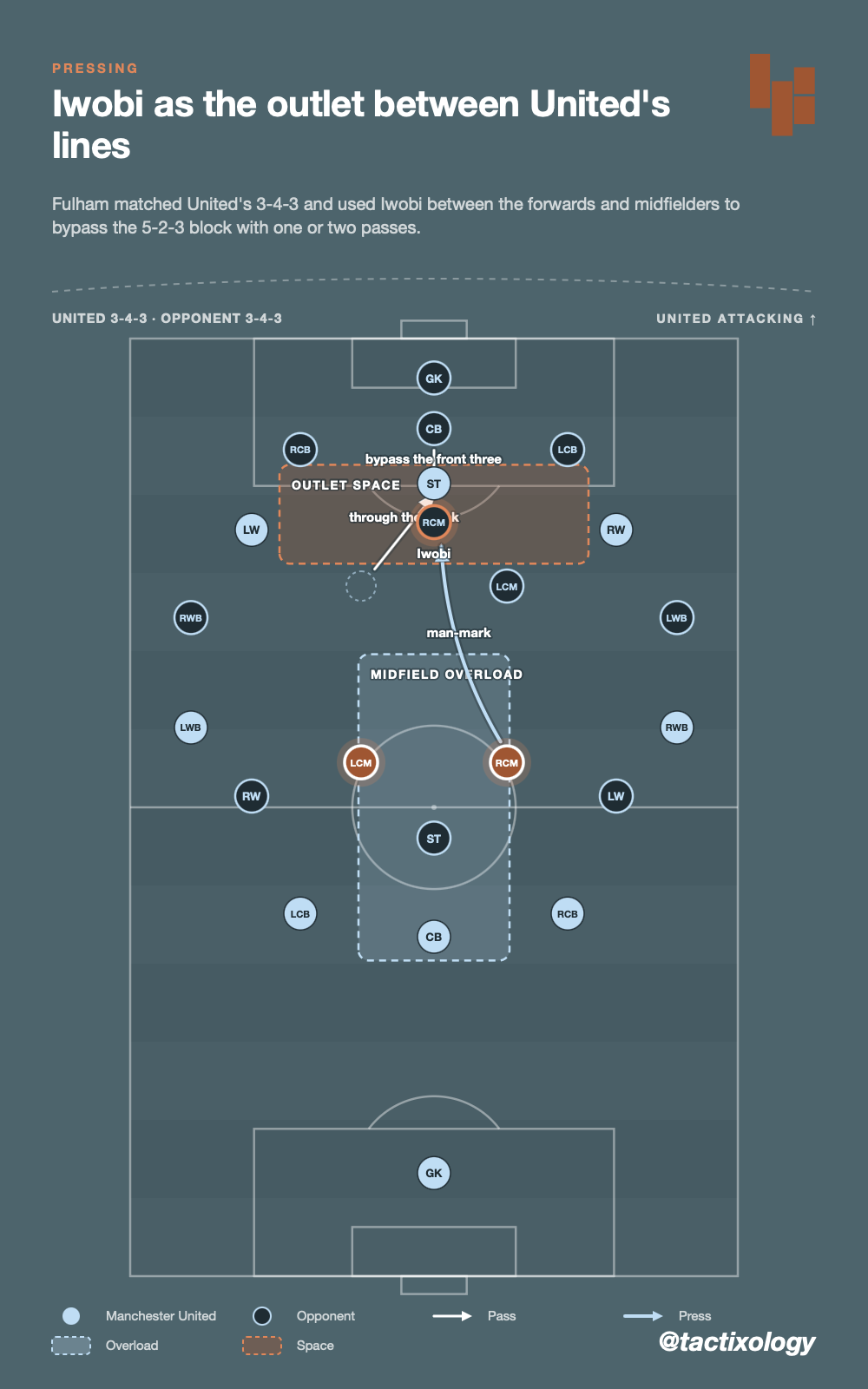
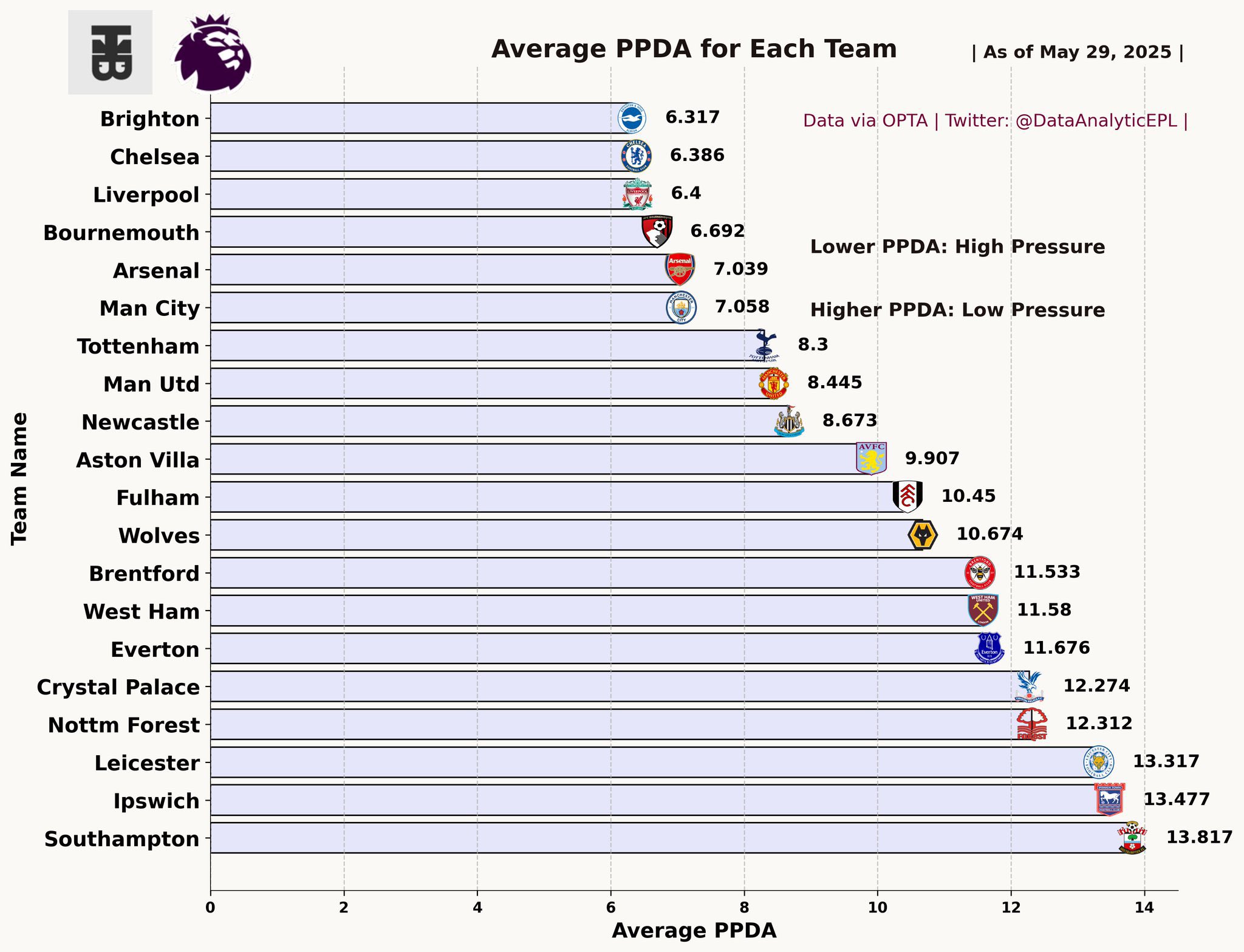
Arsenal pressed high but passively, Fulham refused the bait and overloaded midfield, Grimsby pressed man-to-man: one system, three different results.

Why did United look very good against Arsenal, poor against Fulham and very poor against Grimsby? At first glance, it doesn’t make sense - but only if you haven’t been watching the games under Amorim. In fact, United usually look OK against top sides that want to attack and press high in order to score.

Since Amorim’s build up patterns are based on baiting in central areas and wide overloads or going direct, it suits us when a team is willing to press from a high block. That gives us an opportunity to use numerical advantages out wide, to quickly transition through those areas. 

Especially if they’re not very effective at blocking us: in the 1st half, Arsenal struggled to figure out what to do with our WBs, often leaving them unmarked. Furthermore, Arsenal took an early lead and were more than happy to sit back, as they are known to do. That’s why it was easier for United to build and progress.

United tend to struggle when:
🔴 teams use an aggressive, m2m press, pinning our WBs back and closing down buils up lanes (Grimsby)
🔴 teams refuse to take our bait, waiting for us in a mid or low block, forcing us sideways or long all the time (Fulham)

Longform

The Mainoo Problem

Mainoo's value sits in receiving under pressure and turning out of it, the connector function Amorim's pivot partner for Bruno is not being asked to provide.

What’s all the fuss about?

To base an entire footballing project, as they call them now, on one player, no matter how good or great, is a highly romantic and a highly unrealistic notion; projects these days are comprehensive endeavours involving everything from tactial vision, recruitment, fitness and nutrition.

No room for old-school romanticism there.

And yet, if the project your club is building does not find ample space nor an adequate role for the best player your academy has produced in almost a decade - in other words, a player like Kobbie Mainoo - what does it say about that project?

Kobbie Mainoo has been dealt a bad card and is now left holding it, while the game moves on. He is not an Amorim midfielder, in the sense of what Amorim himself says he wants in a midfielder at United.

Or to be more precise, because Amorim cannot say this directly: what he is looking for in a pivot partner for Bruno, who is sure to start almost every United game this year, and is likely to play most of them as a CM.

Mainoo is not a runner, a ground-covering and tackling machine whose primary IP function is not to receive under presssure, carry & pass, but rather to provide support for those who do.

Match analysis

United’s flat back line: How West Ham exposed a serious flaw

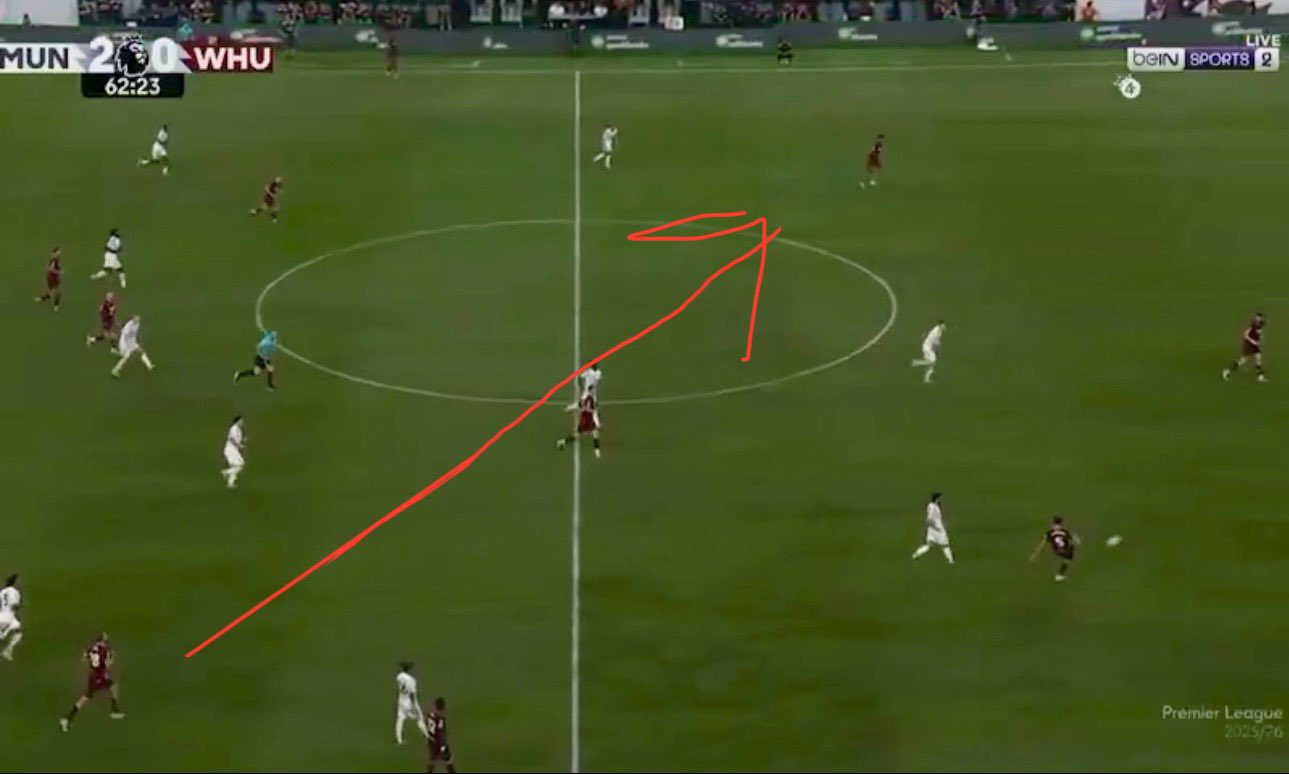
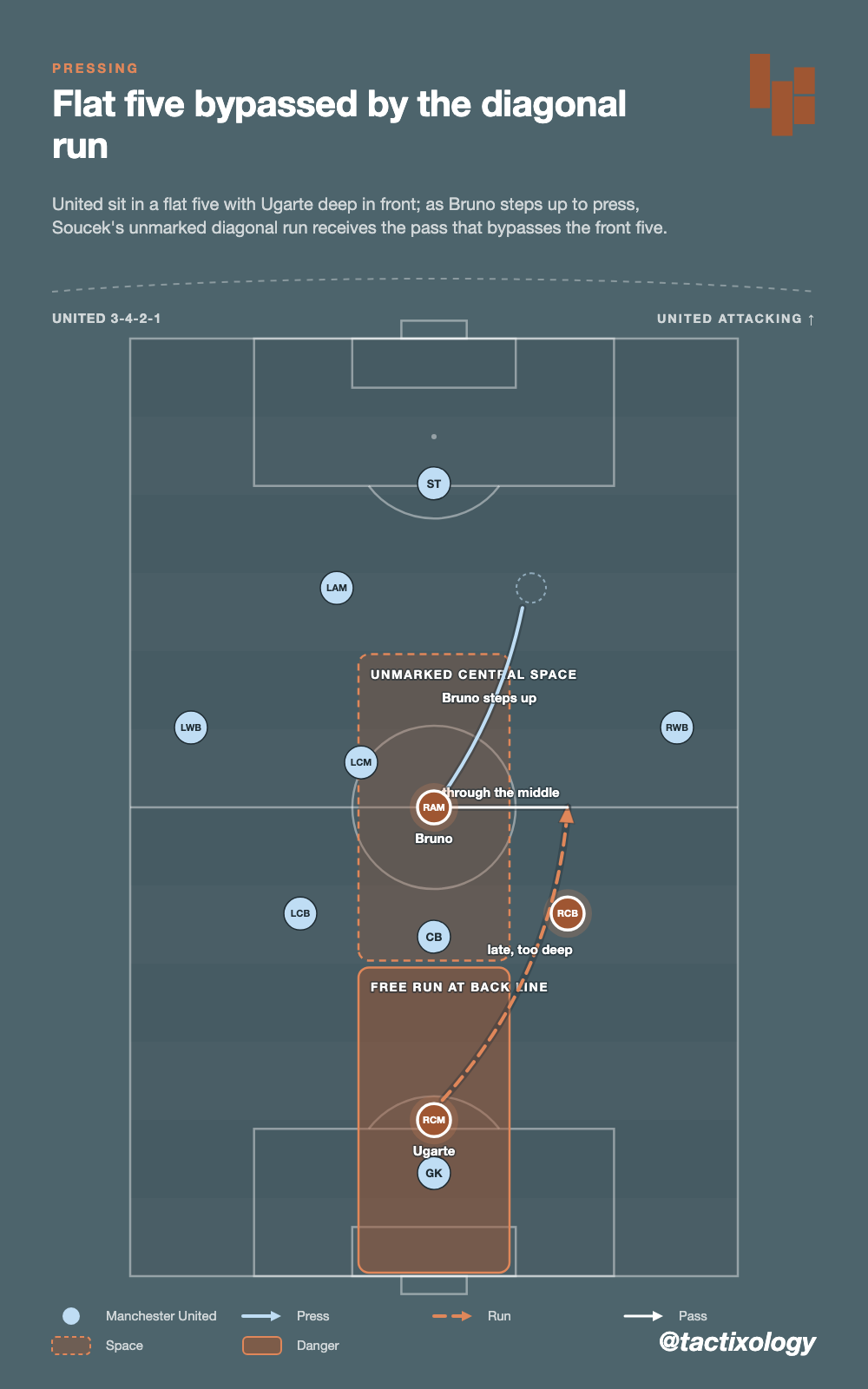
A single West Ham goal in a friendly shows how United's flat 5atb block, with a deep DM in front of it, collapses the moment the front line steps up.

West Ham’s goal against United seems unworthy of a deeper analysis: it’s a pre-season friendly, an almost trivial lapse in concentration when United were ahead.

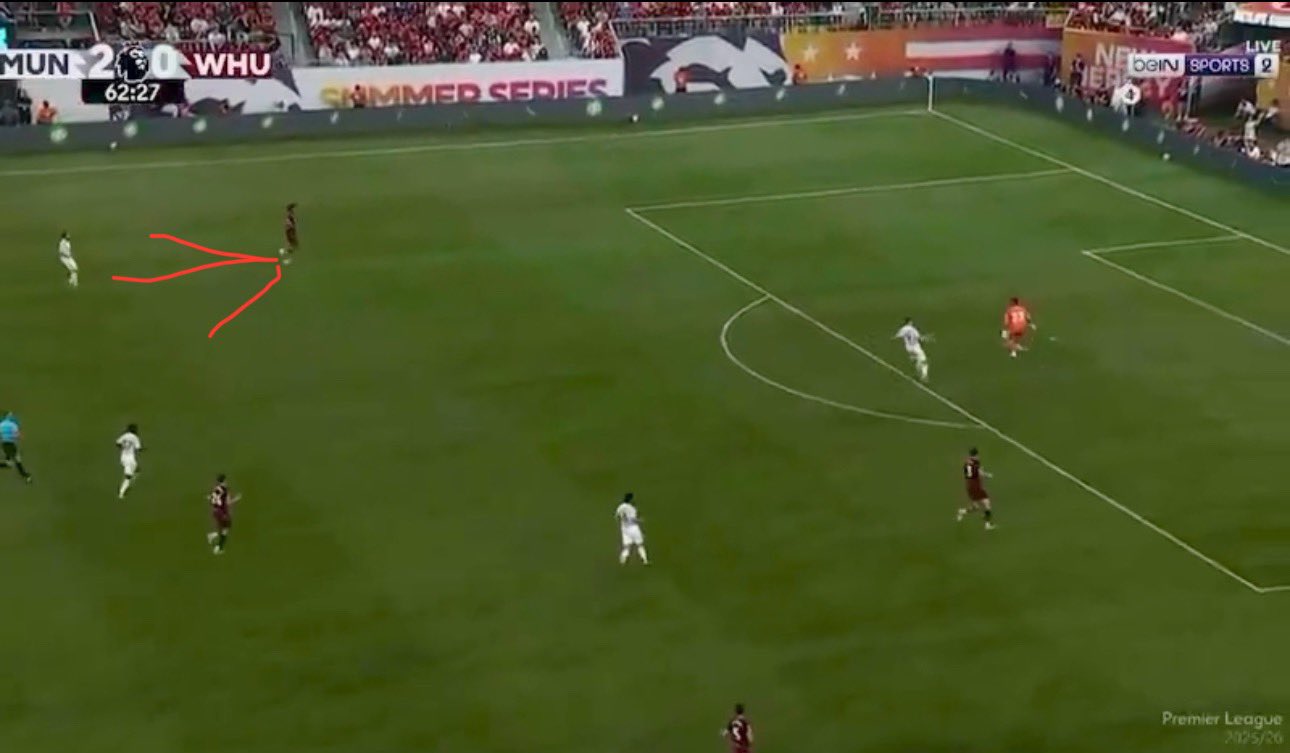
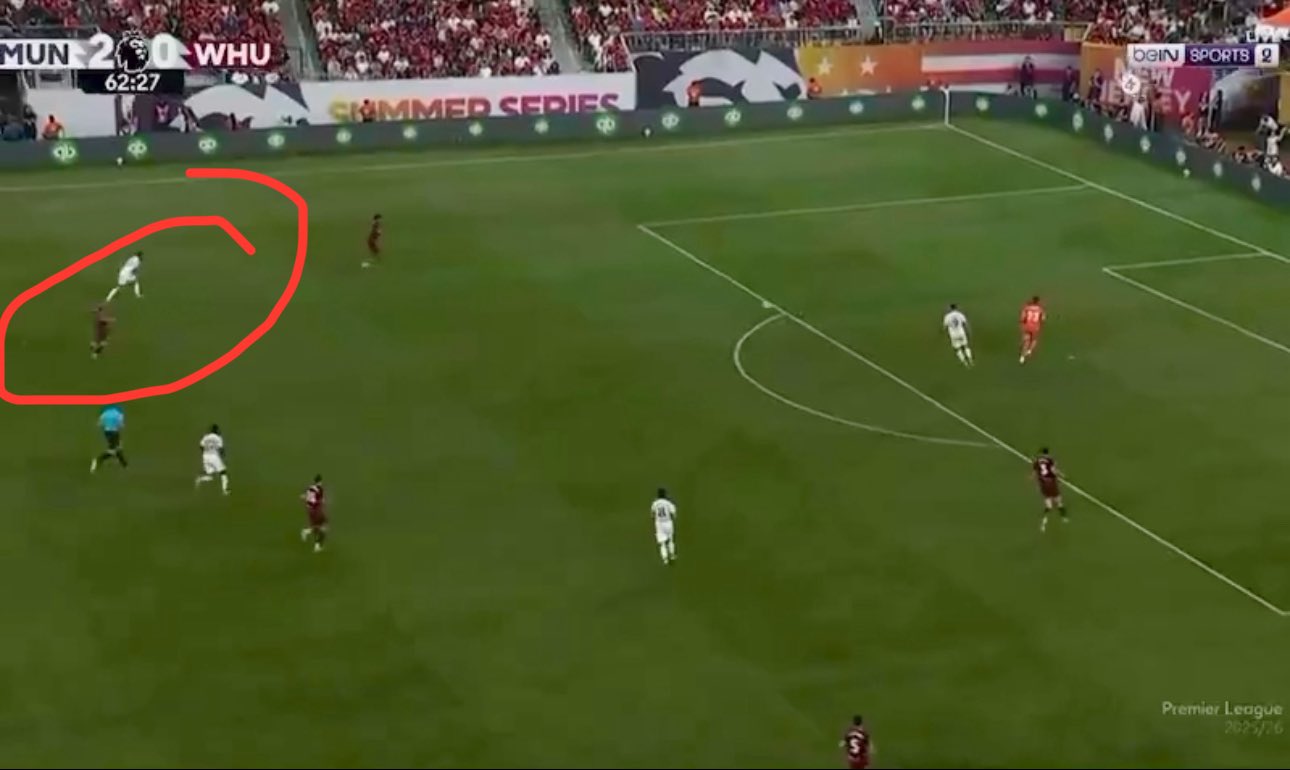
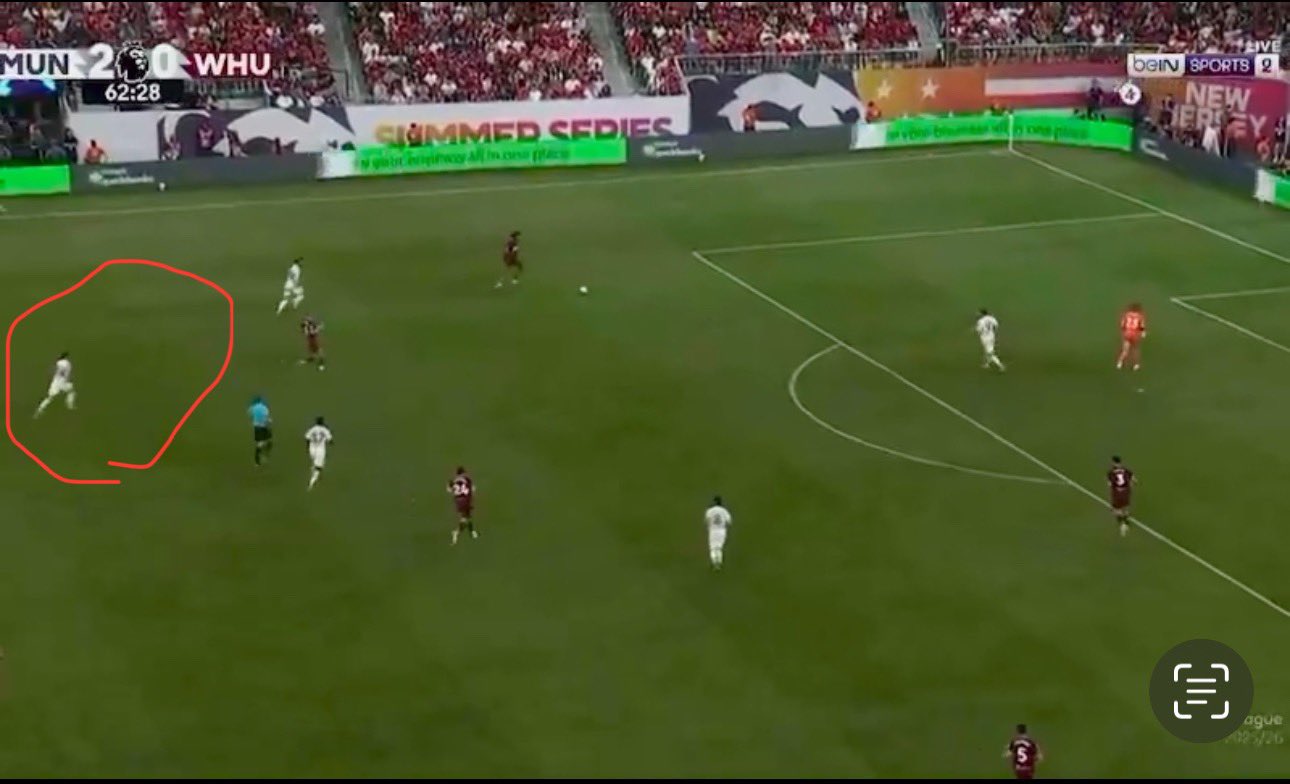
But upon further review, the goal actually exposes many things that are problematic with how United defend.

Specifically, how we structure the defensive block, how we step up and apply pressure, how we make up for nummerical disadvantages of a back 5.

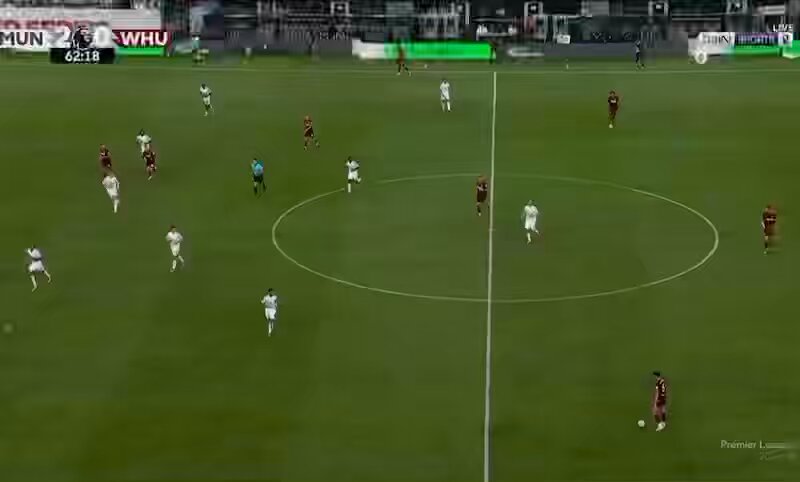
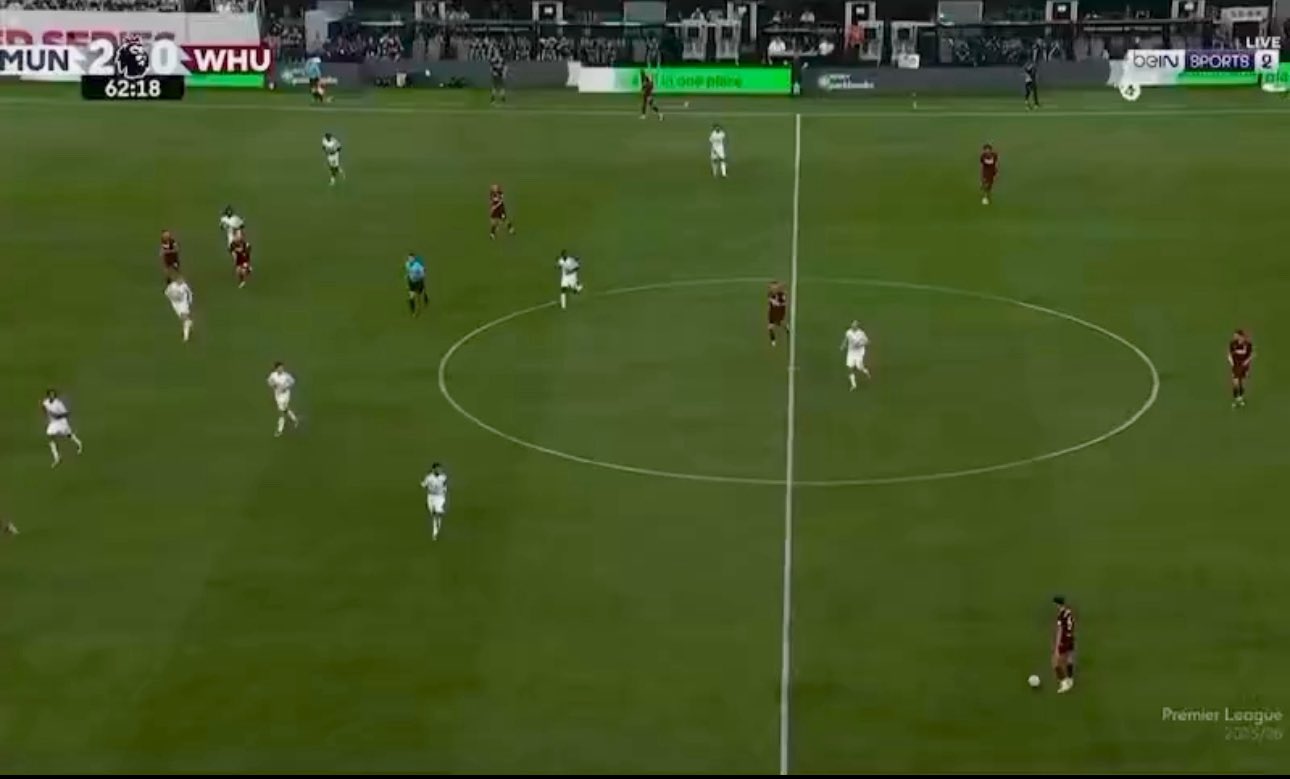
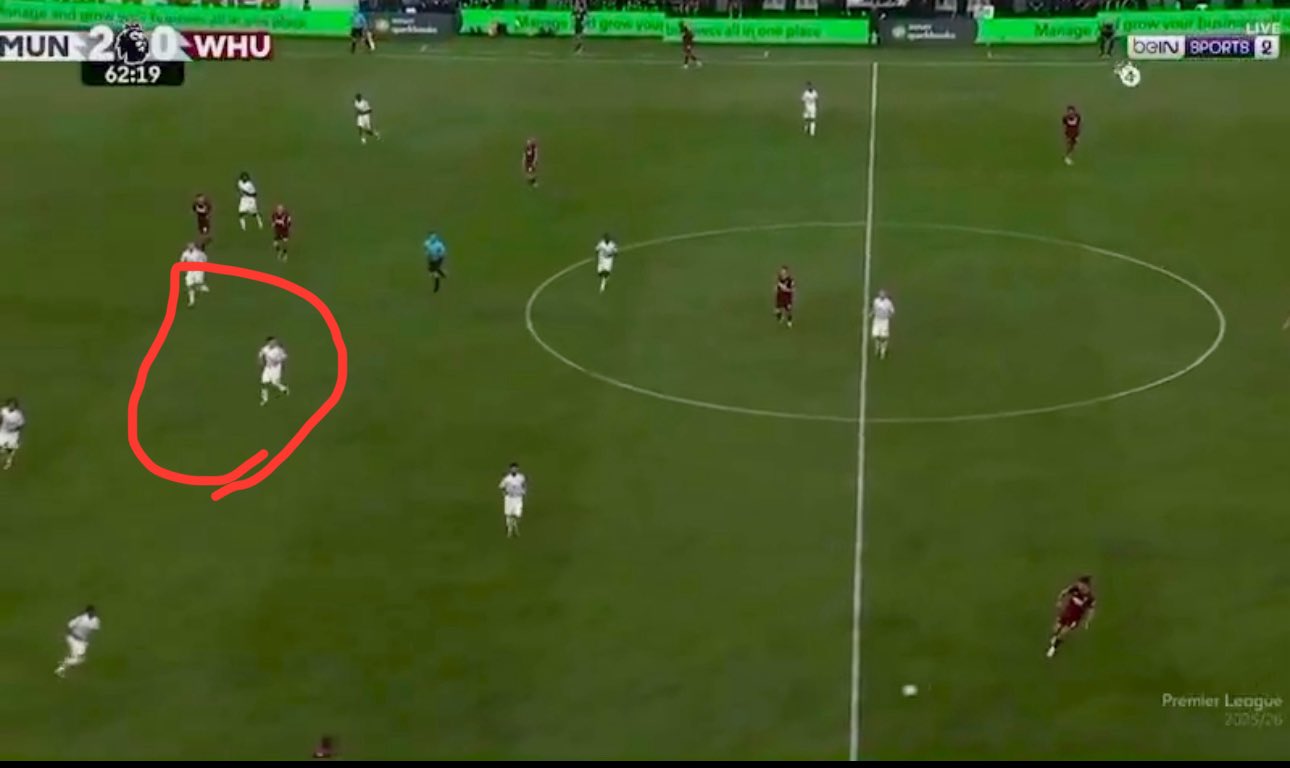
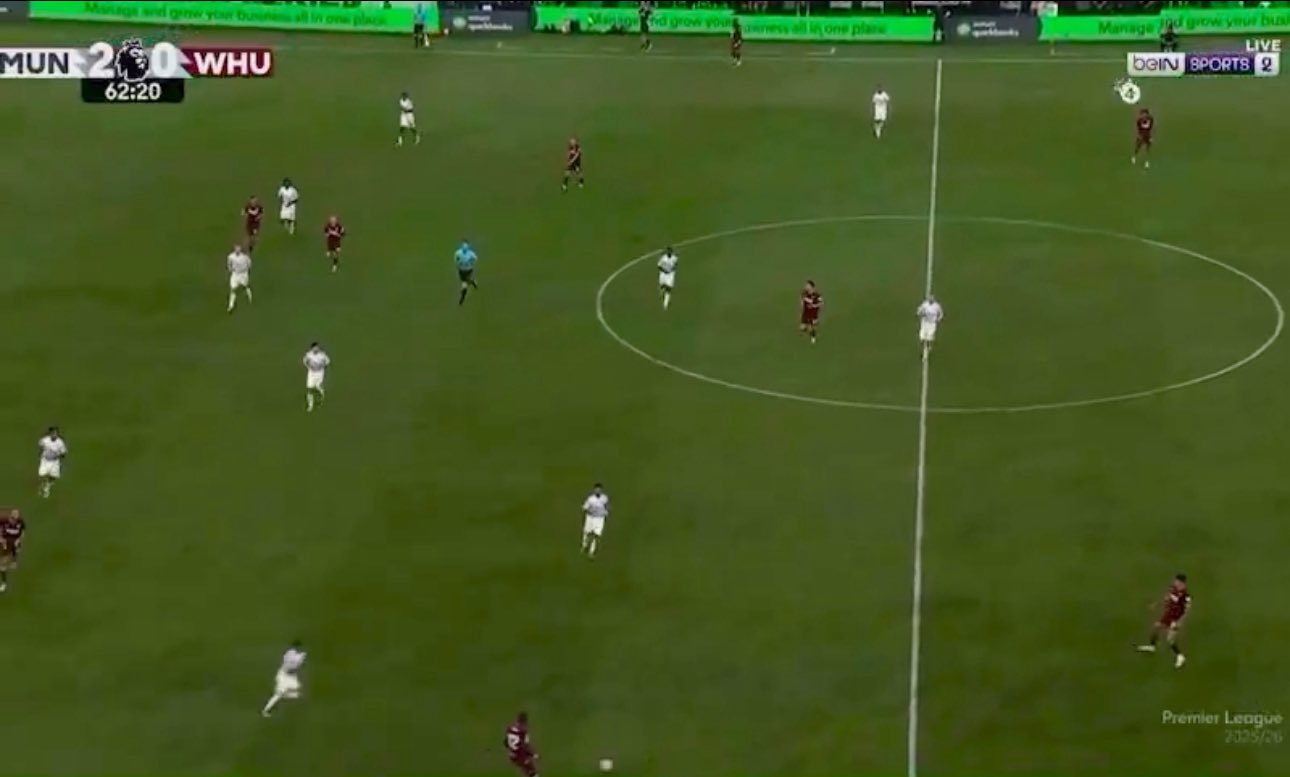
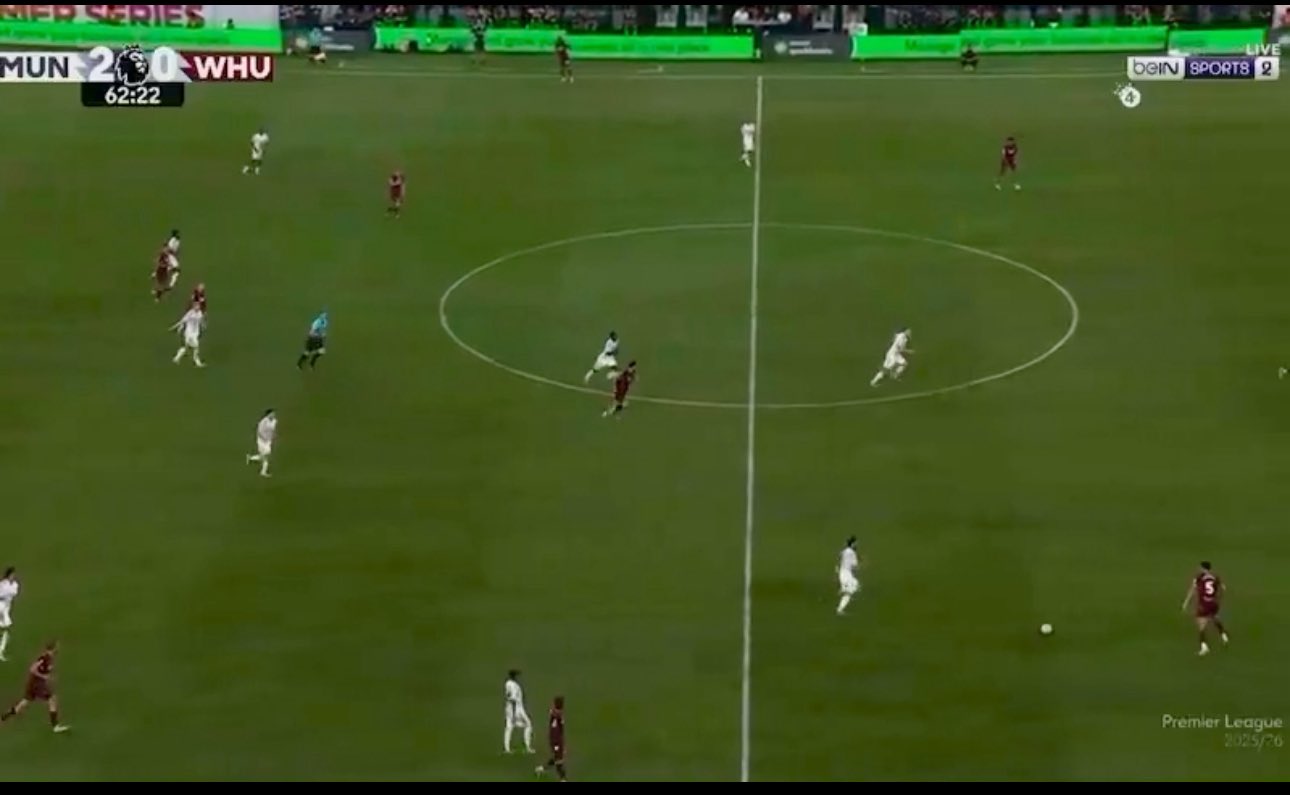
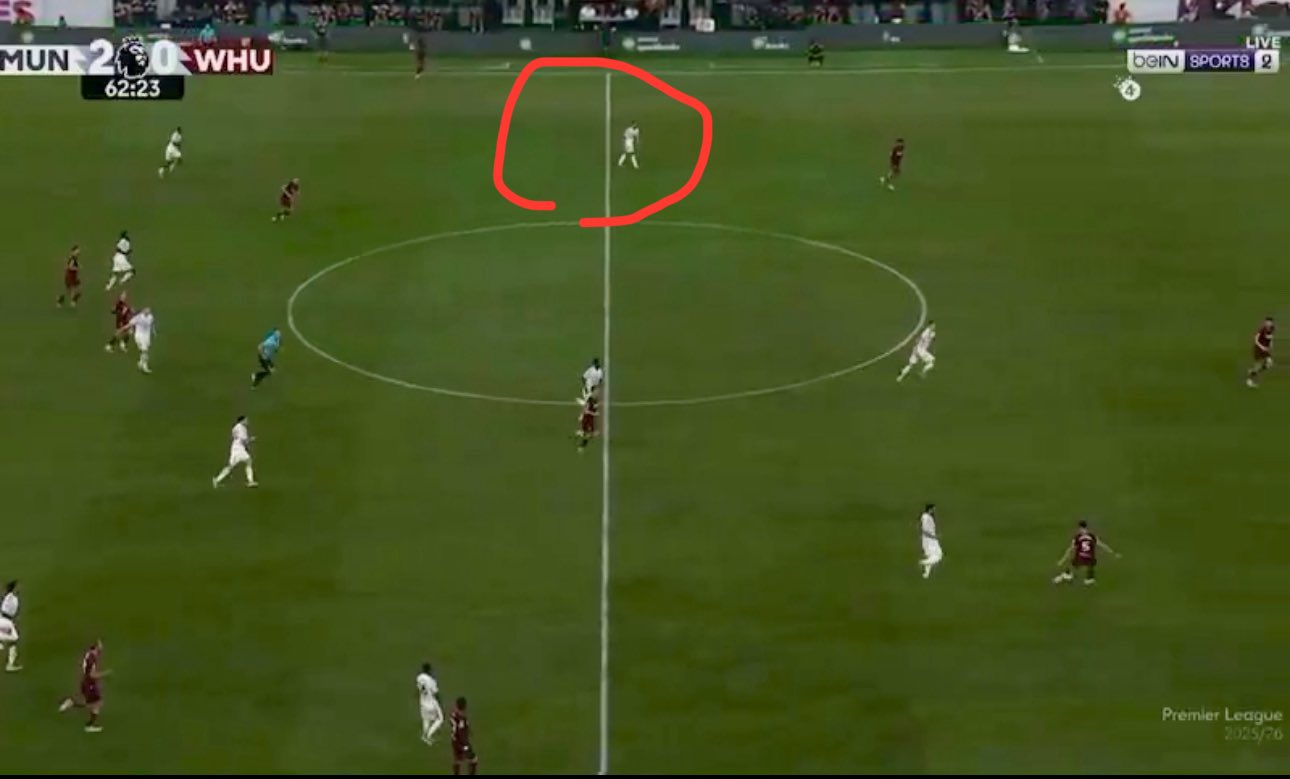
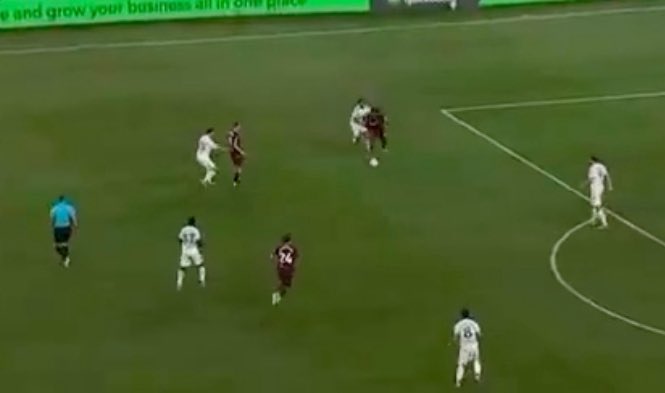
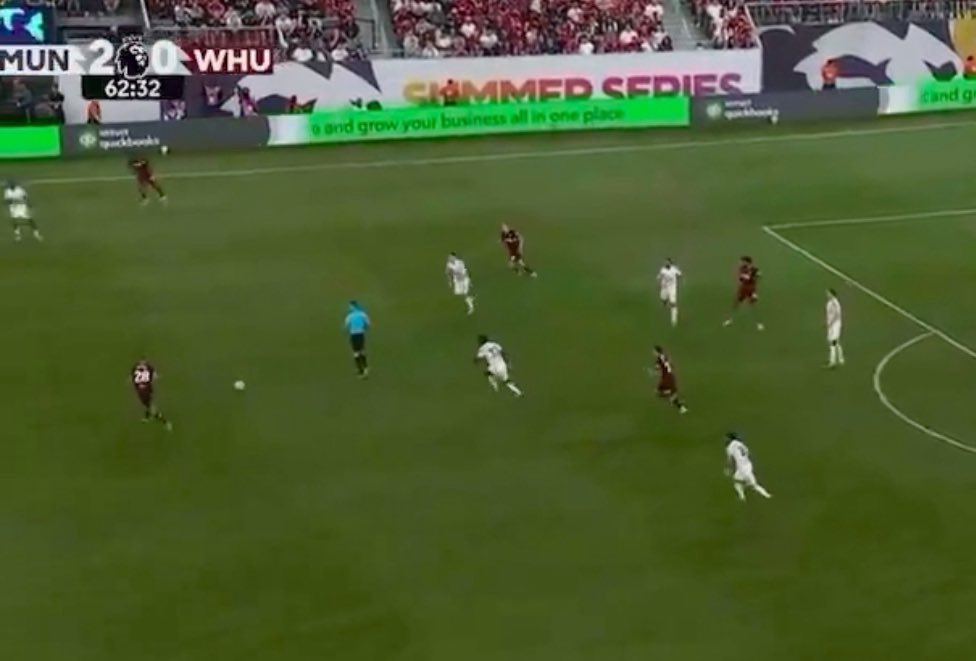
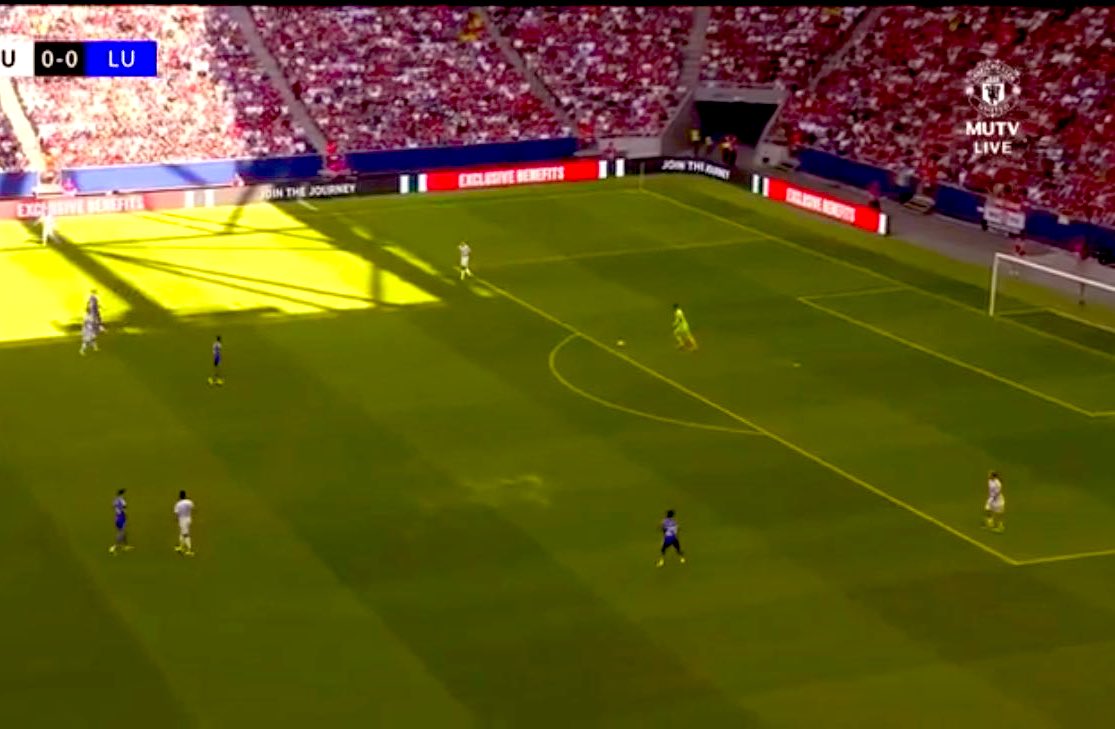
Video still at 62:18 of United 2-0 West Ham, the West Ham move beginning with United spread flat across their own half.
Video: watch it on X

Issue 1: a very deep flat five

This is how United are positioned at the start of West Ham’s sequence.

Extremely deep, with a flat 5 at the back (Amad is out of the frame), with WBs in particular very far from their men.

Tactical analysis

Amorim's build up: the fatal flaw

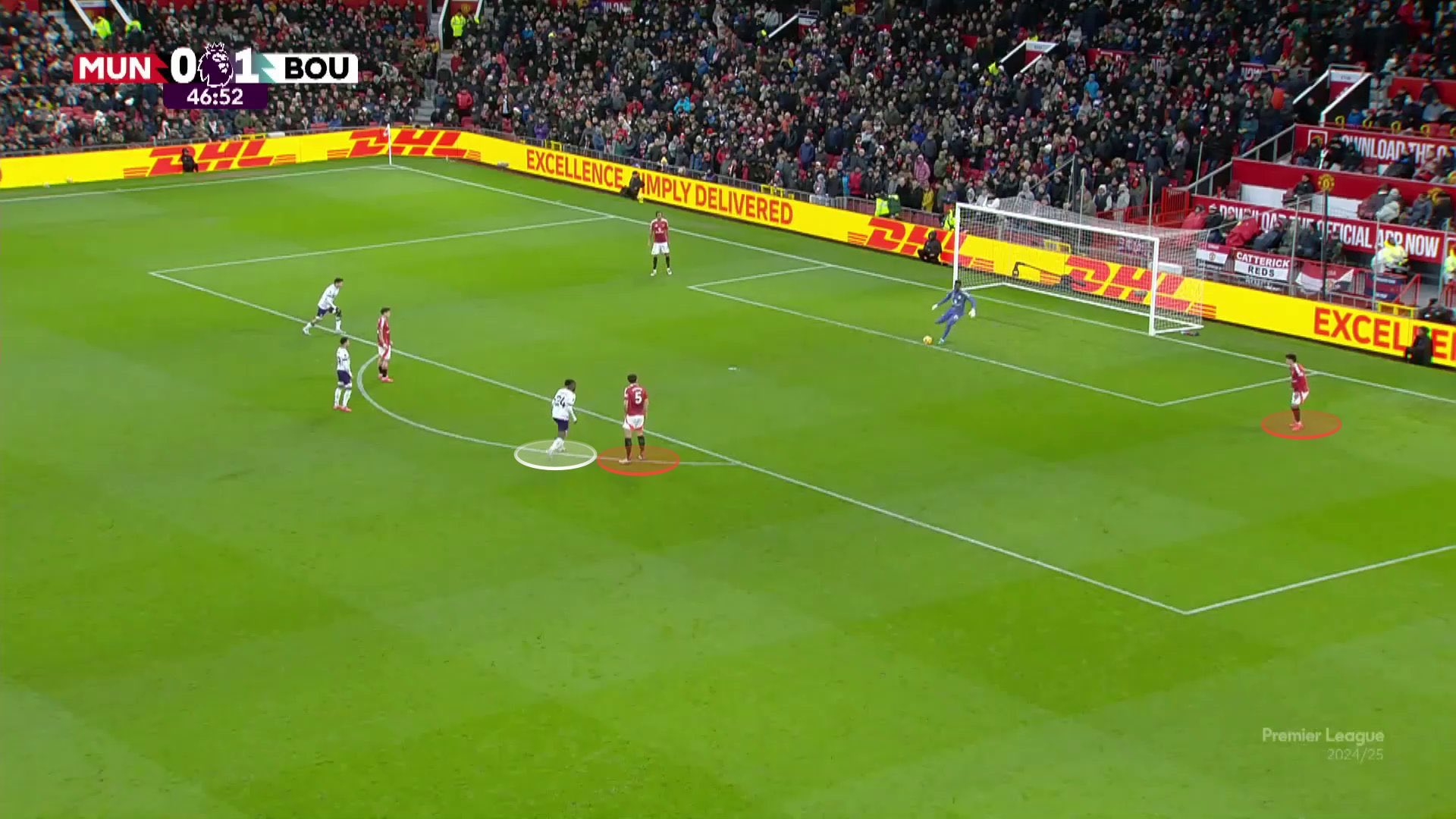
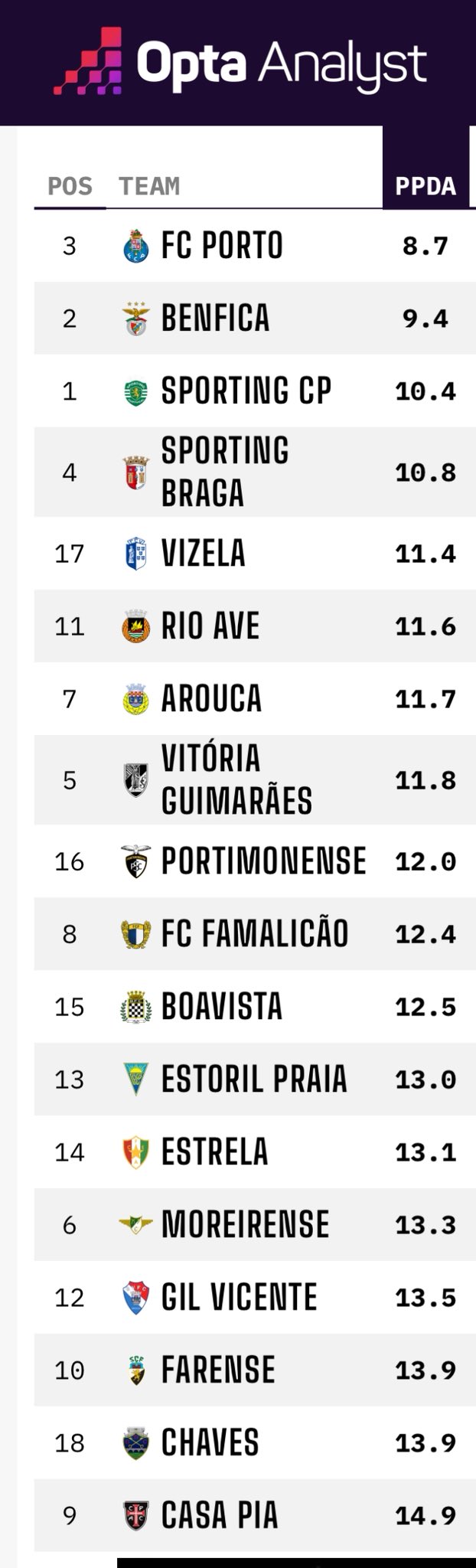
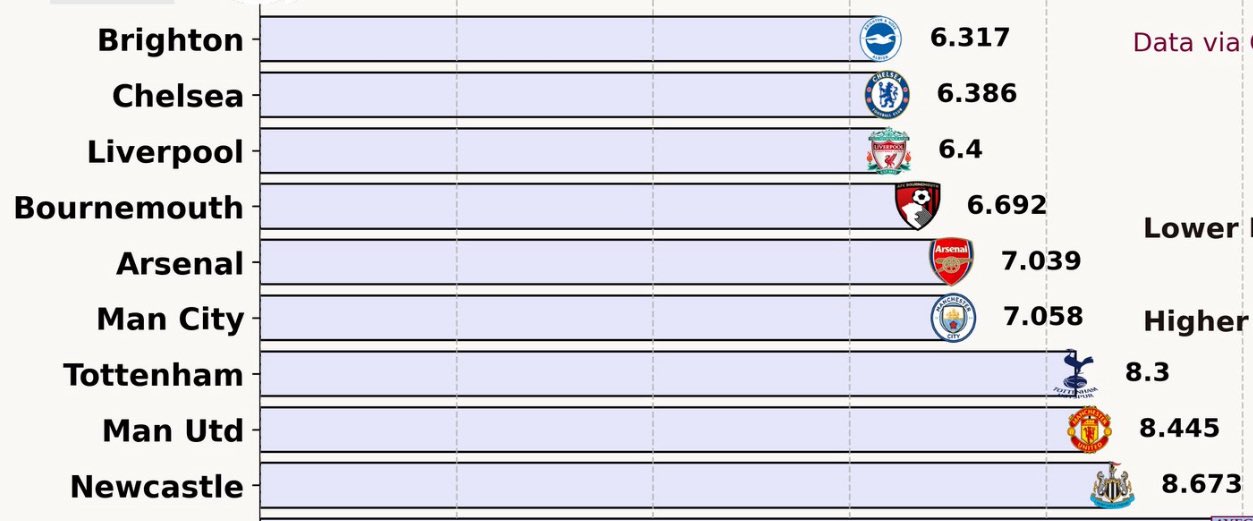
The inverted centre-back is only part of it: why Amorim's goal-kick structure fails in a league where 47% of games come against elite pressing sides.

Building attacks from own third - build up, as we call it - has been one of the worst aspects of Amorim’s United tenure so far.

Most criticism is focused on inverting the CB into the midfield during goal kicks, a frustrating gimmick, executed poorly, that has become the poster child for all woes.

And while it contribute greatly to bad structure since it eliminates a player from the equation, it’s far from being the only issue with United’s build up:

- reluctance to use central progression, with midfield pivot often marked out of games
- CBs too passive, not carrying enough to invite pressure and distrupt blocks
- both WBs too static and deep, not arriving dynamically into space nor pinning players down
- GKs trying to go long and direct too often, leading to turnovers & defensive gaps
- inability to progress into desirable half-space channels, with WBs and AMs often occupying the same wide zones

Why has the build up been so bad? Why do we struggle to attract presure, manipulate blocks, create space & progress into good zones?

Why are teams, not just top ones, able to stop United’s progression so easily? My theory is that it has to do with fundamental differences in level of OOP play in the PL versus most other leagues.

Opinion

Losing Rashford is the club's failure

United failed to maximise an asset through constant changes in managers, game models and roles, and the end result is what matters.

When you fail to fully develop and ultimately end up losing an asset like Rashford, yes - it’s the club’s failure.

Not necessarily the club’s fault, or not exclusively the club’s fault, but definitely the club’s failure.

A lot of people seem to struggle with this notion, preferring a more simplistic idea of the player receiving huge wages & failing to produce, with the club a passive bystander to this.

It’s what the rage-baiting YouTubers have been telling them, in their never-ending bid to manufacture toxicity, which in turns brings engagement & revenue.

Beautiful irony, isn’t is, that the folks making a living out of producing toxicity, are the ones accusing players of being toxic while making a living.

Why do I mantain that the club must own this as its failure?

1. As a general rule, whether you are a company, a club or any other entity, your try to maximize the assets you have.

If you fail to do so, the failure is yours, regardless of the whats and hows and whys. From the club’s perspective, that’s irrelevant - the end result is what matters.

And if the end result is failing to develop & ultimately losing the asset, then the club suffers the negatives.

Opinion

Selling Rashford is a cultural defeat for United

The footballing case for selling Rashford holds, but losing him is a verdict on how the club has been run for a decade.

What Marcus Rashford had at United was a certain sense of purity and communal proximity pretty much gone from the professional game.

A throwback to the old days when local youngsters joined their local clubs and eventually grew into local heroes, scoring goals and helping poor kids on days off.

Not much value should be placed on nostalgia or nostalmania - such notions are often filled with forgery ans false memory - but in Rashford’s case, it was warm and pleasant, as nostalgia ought to be.

That dream was brutally destroyed, by the harsh realities of today’s football and today’s United: poor results, toxic fandom & the rage-baiting media complex.

They didn’t destroy the idea of Rashford despite his sense of purity; they destroyed it because of his sense of purity.

He was the perfect target for their cynical hot takes, engagement traps and reach boosters. Opposites naturally attract; nothing like dragging a decent man through vile mud.

And, yes, it was also destroyed by years of mishandling, misprofiling and miscoaching, robbing him of the opportunity to become the kind of a player he could have been.

Is he a perfect player? No. Is he a perfect player for Amorim’s game model? Doesn’t seem to be. In a pure footballing sense, the decision to sell works for both sides.