Amorim's build up: the fatal flaw
The inverted centre-back is only part of it: why Amorim's goal-kick structure fails in a league where 47% of games come against elite pressing sides.
Building attacks from own third - build up, as we call it - has been one of the worst aspects of Amorim’s United tenure so far.
Most criticism is focused on inverting the CB into the midfield during goal kicks, a frustrating gimmick, executed poorly, that has become the poster child for all woes.
And while it contribute greatly to bad structure since it eliminates a player from the equation, it’s far from being the only issue with United’s build up:
- reluctance to use central progression, with midfield pivot often marked out of games
- CBs too passive, not carrying enough to invite pressure and distrupt blocks
- both WBs too static and deep, not arriving dynamically into space nor pinning players down
- GKs trying to go long and direct too often, leading to turnovers & defensive gaps
- inability to progress into desirable half-space channels, with WBs and AMs often occupying the same wide zones
Why has the build up been so bad? Why do we struggle to attract presure, manipulate blocks, create space & progress into good zones?
Why are teams, not just top ones, able to stop United’s progression so easily? My theory is that it has to do with fundamental differences in level of OOP play in the PL versus most other leagues.
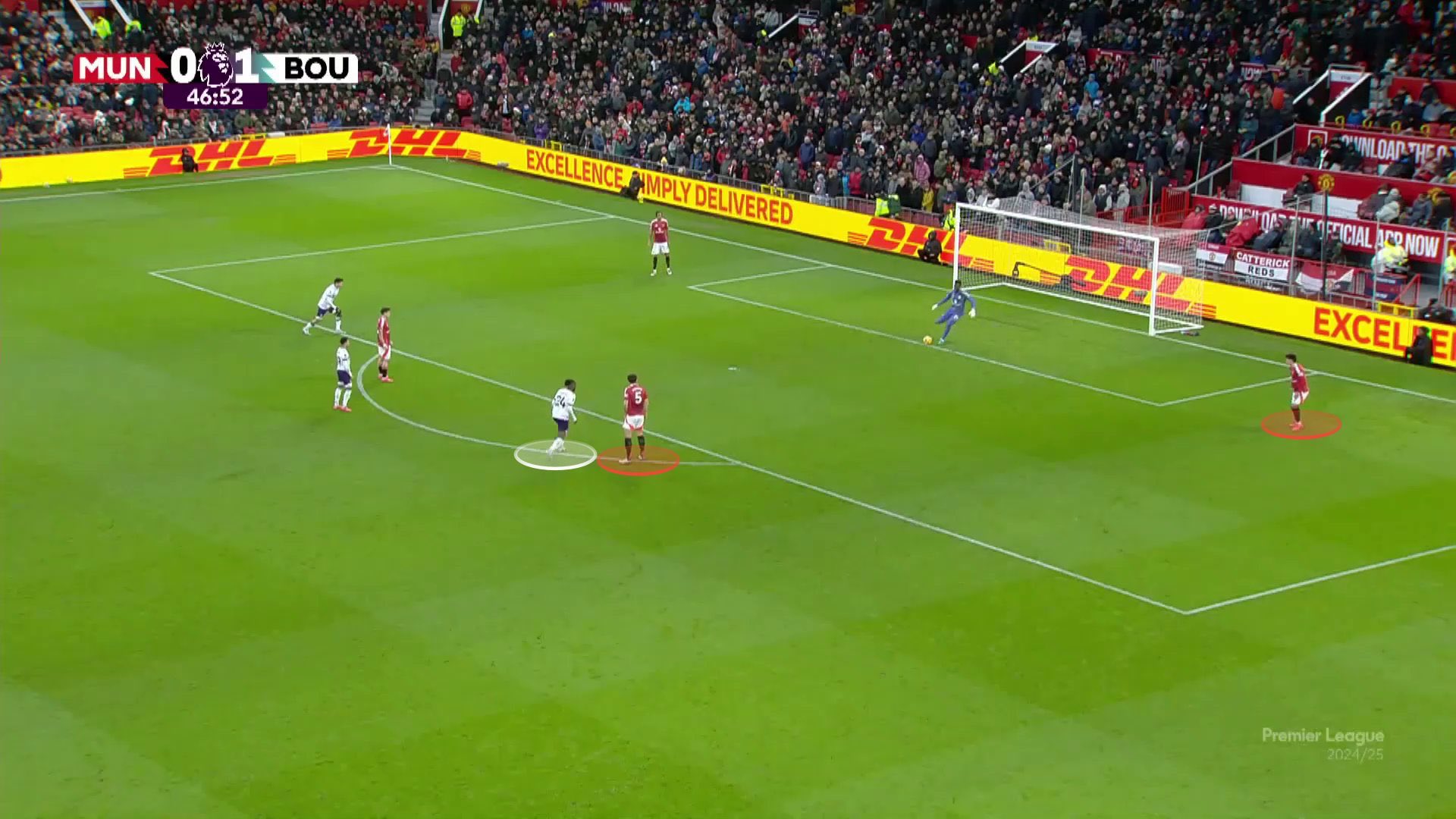
Firstly, what is Amorim trying to do? The macro idea is to lure opposition to press centrally, which opens up wide areas for progression.
Here, you can see Maguire acting as a decoy to attract pressure, allowing Onana to go short to WCBs or long to WBs.
📷 credit: @EBL2017
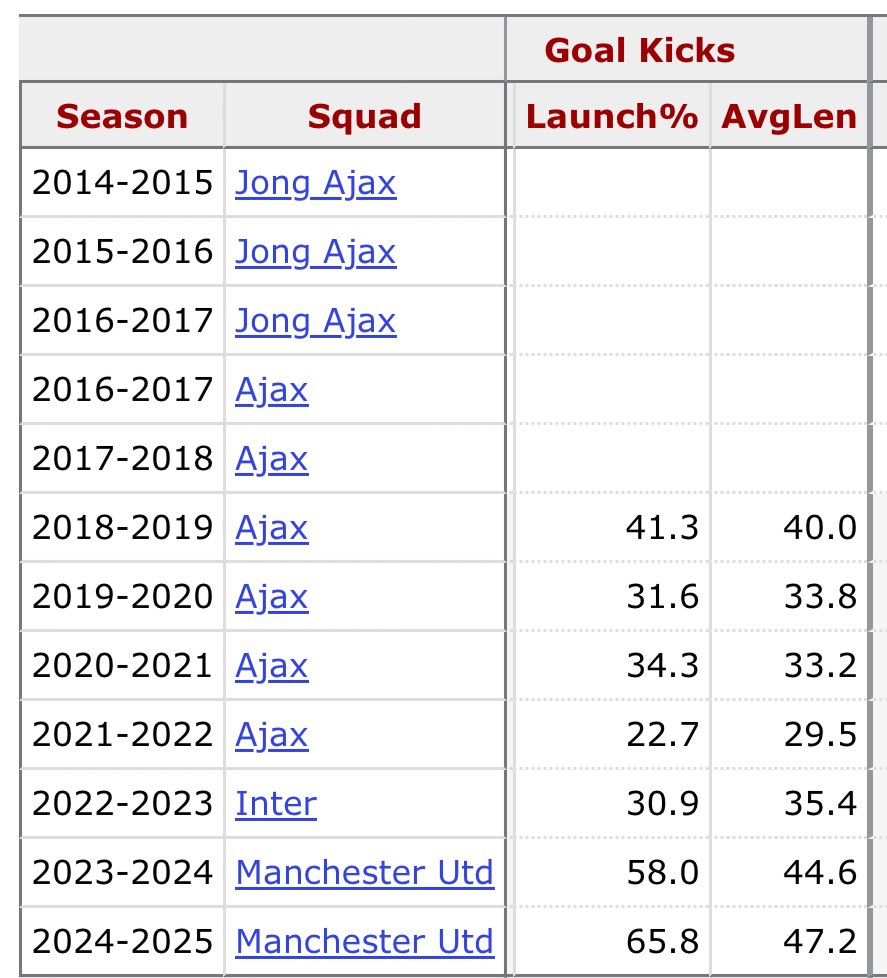
Alternatively, the GK might launch it directly to the CF, to bypass the front press and keeps teams guessing.
We’ve seen plenty of that, with Onana’s recording career-highs in goal kick avg. length and % of kicks launched long.
Look at the difference vs Ajax & Inter years!
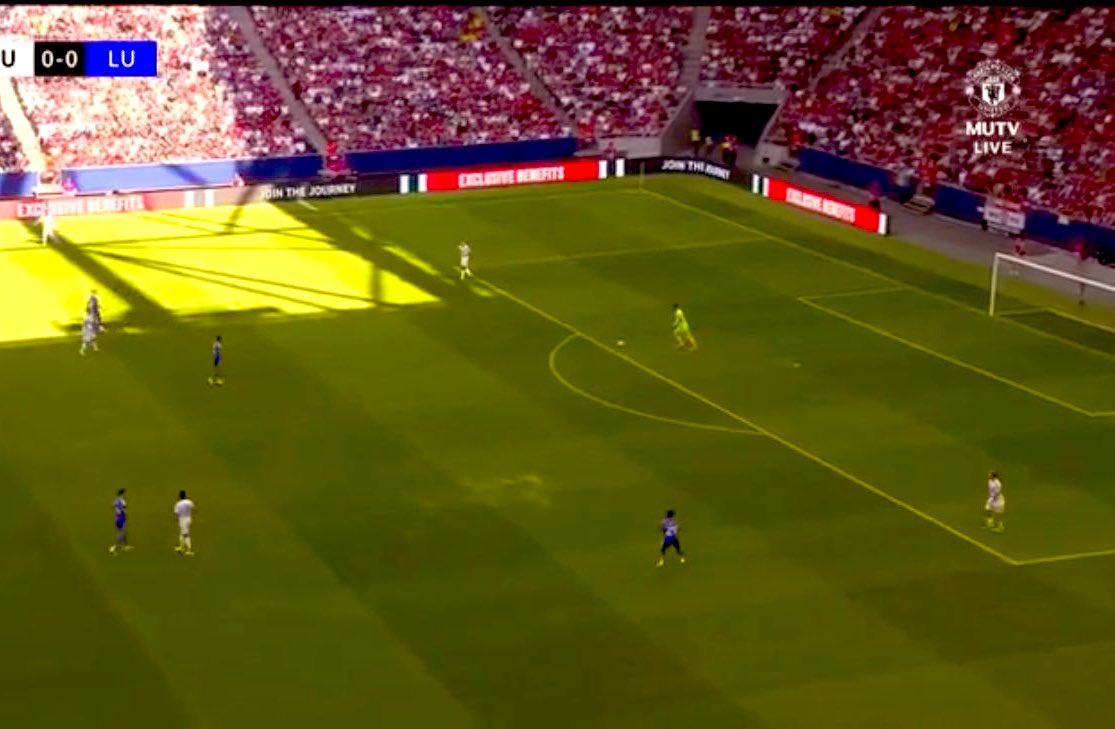
Either way, the intention is not to build directly through the CCB. Rather, it is to go around or over the block.
The CCB might receive and play a bounce pass - but his primary aim is to give an extra target for the opposition to mark in central midfield areas.
It has been a tremendous failure.
As many analysts on here have noted, right from Amorim’s start at United, you simply can’t afford to sacrifice one player during build up in the PL.
There are other ways Amorim is trying to execute on his macro idea of luring the opposition centrally to play around or over the block.
But it’s not working at all. Why?
My theory is simple: there are vast, fundamental differences between quality of OOP play in the PL and most other leagues, Portugese Primeira Liga included.
And nowhere is this more apparent than in pressing quality & intent, as observed through the so-called PPDA stat.
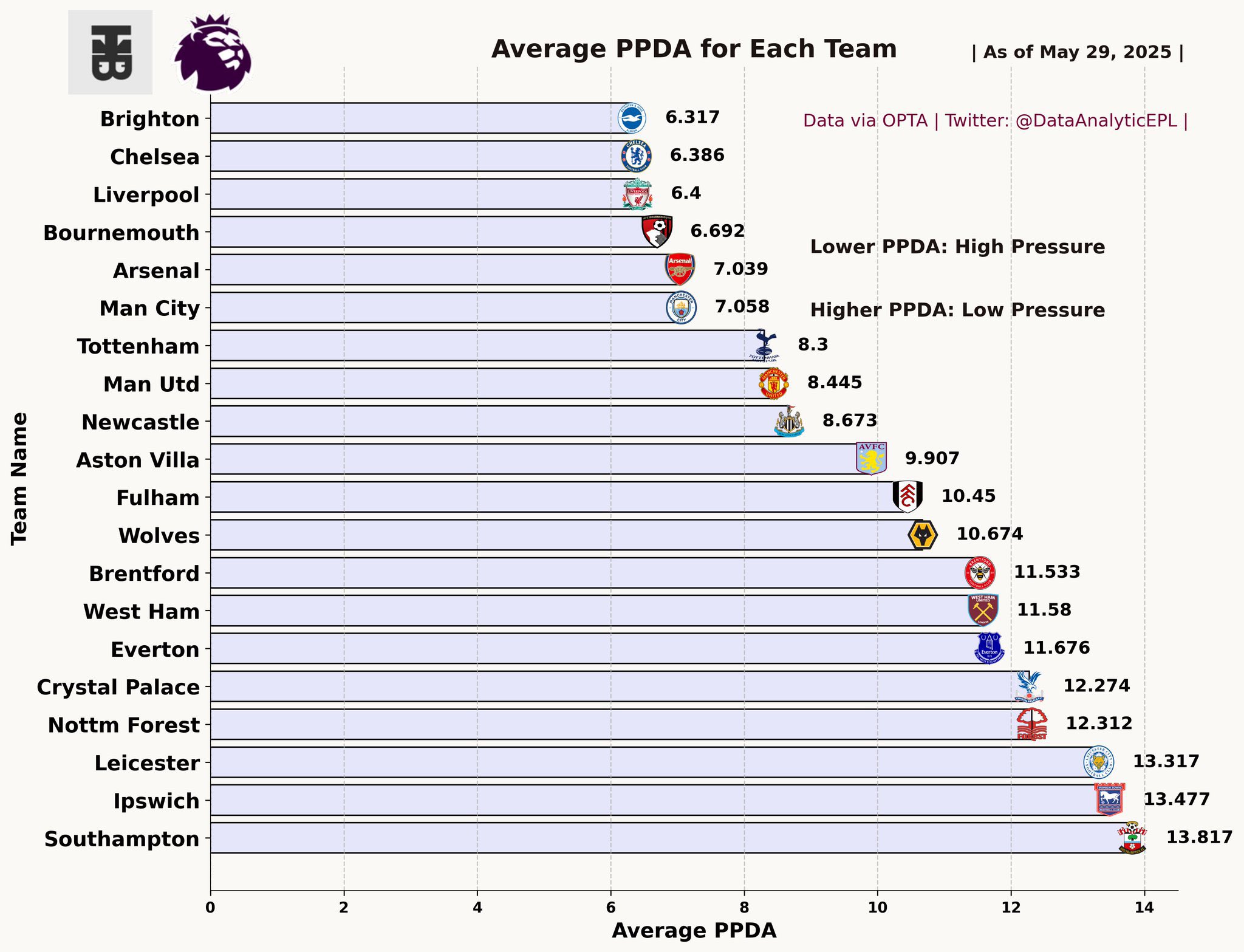
Here is the average PPDA (pass per defensive action) in the PL last season. Remember, lower is better:
And here the PPDA in the Primeira Liga, in 23/24, Amorim’s last full season:
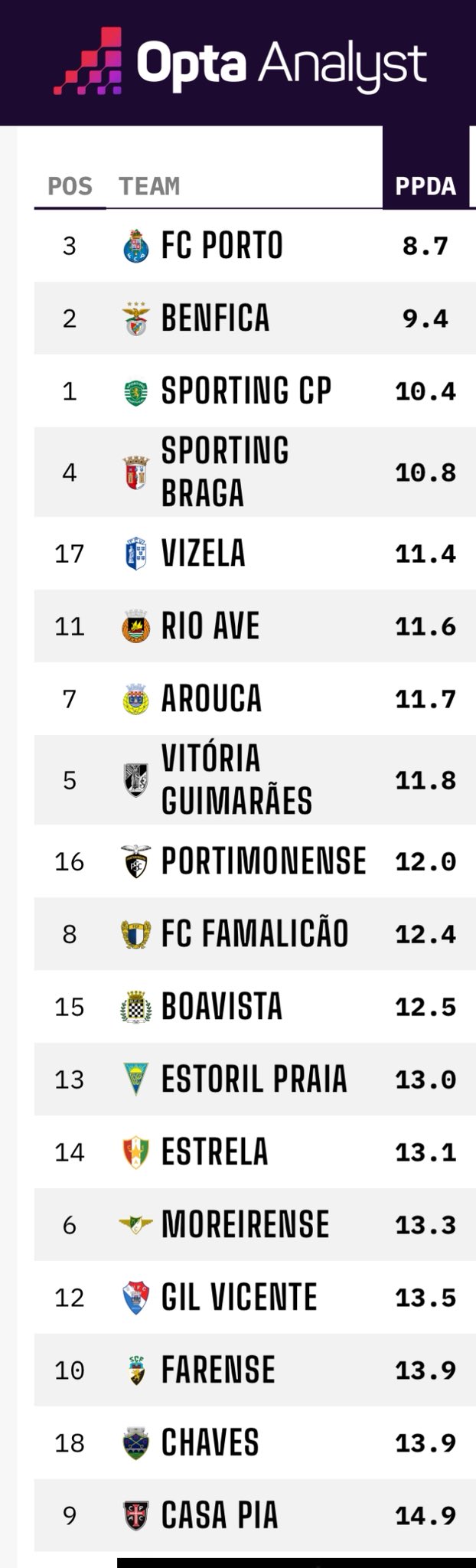
The average for PL is 9.8, while the average for Primeira is 12.1, indicating a 23% jump in pressing effectiveness and aggressiveness.
But it’s even more interesting to take a deeper look at top teams here.
The best pressing team in Portugal was Porto, with a PPDA of 8.7.
Well… there were 9 teams better than that the PL last season!
So if Amorim had to face an excellent pressing team twice per season, now he has to do it 16 -18 times per year (one of the teams was United).
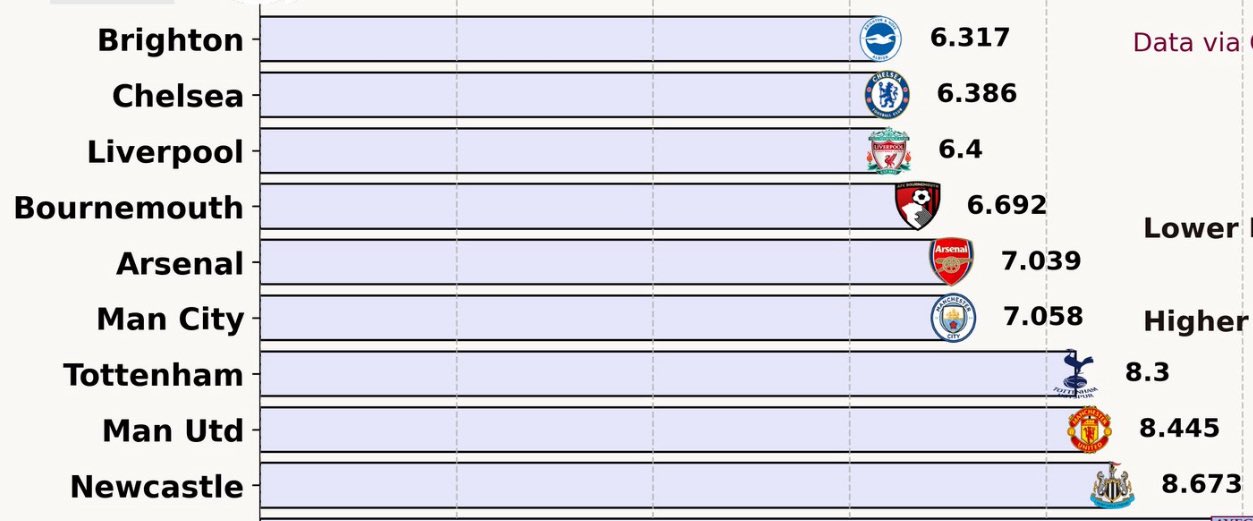
In other words: 5% of league games in Portugal came against teams with a PPDA lower than 9. In the PL, it’s 47%!
There are vast, material differences in how opposition teams approach your build up - and what you are able to do against them.
I think it was @Jon_Mackenzie who said that the general level of OOP play was the thing that coaches from other leagues struggle with the most.
This seems to the happening here, as well. Amorim has to adjust his intent in order to build attacks against PL teams.
As I wrote back in May, the crux of the matter with Amorim is: are ideas good enough while the execution failed, or do his ideas need improving as well?
Nowhere is this as evident as in build up.