United gone long
Long passes have doubled and own-third touches have collapsed: the numbers behind United's direct build-up, and its limits against compact blocks.
There’s a material difference this season in how Ruben Amorim has approached in-possession play generally and build-up specifically.
Is it a pragmatic adjustment due to the strength of sides we faced - or a profound change in Amorim’s game model?
Whereas last year United often tried to build and defend through retention, by keeping possession in own half and hoping for a progression opening, we’ve been substantially more proactive this season.
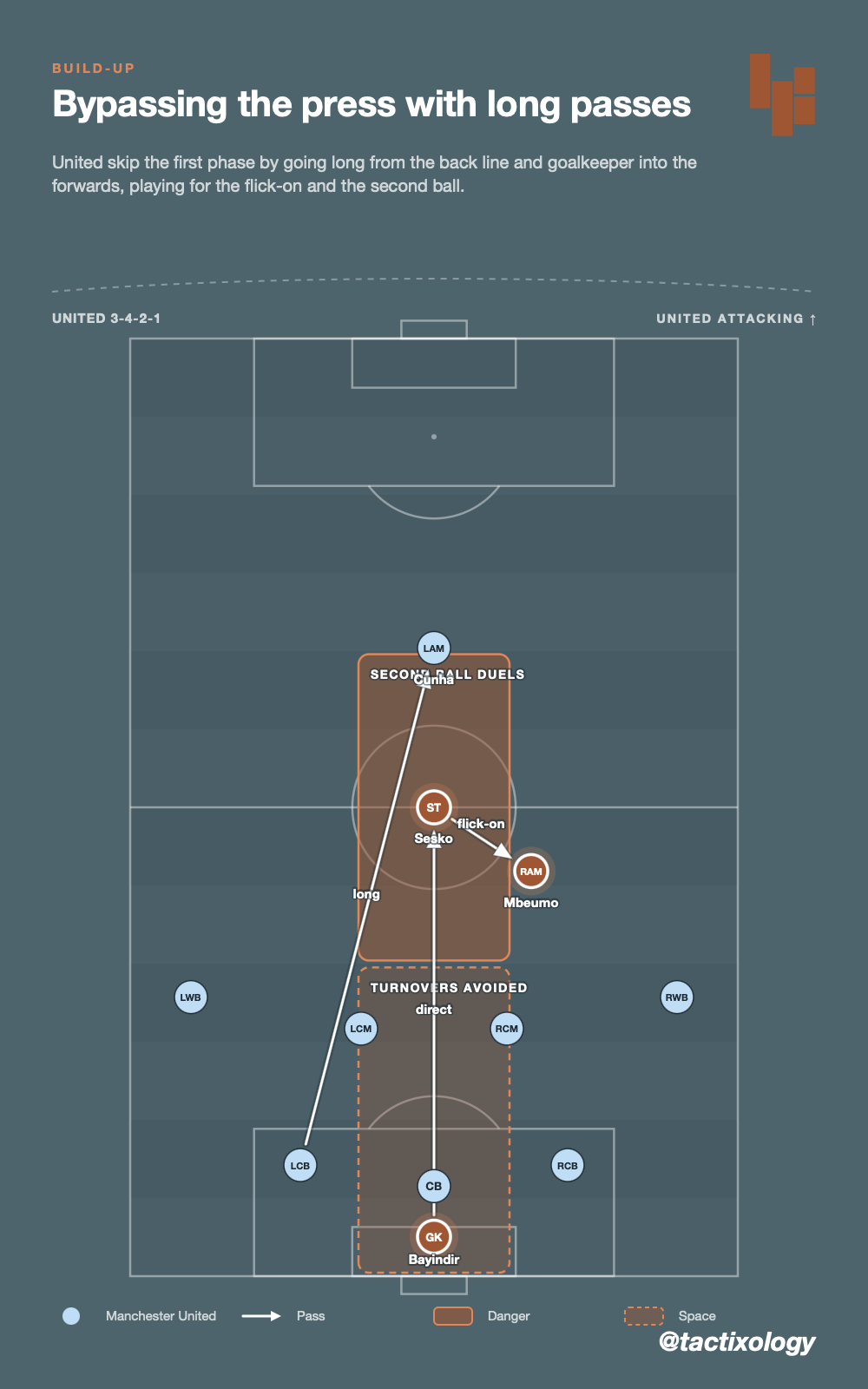
The intent has been to use the opposition’s high pressing and attacking against them, by going long and direct, usually from CBs to AMs, or from GK directly to forwards.
And it hasn’t just been about progressing, but also about minimizing risk: retention in our own 3rd last season often led to turnovers in very dangerous areas.
Is this a temporary tactic used to survive our rough opening schedule featuring Arsenal, City and Chelsea, or a more substantial change in how we build and progress?
More importantly, is it an effective and sustainable way to win in the PL, especially against mid and low blocks?
First, the numbers! 📊
United are passing long much more than last season, indicating a much more direct intent.
Long passes attempted (%):
- 2024/2025: 11.9%
- 2025/2026: 20.1%
Total passes are down, at the expense of fewer short passes.
These are not just the random, panic-induced long passes that we’ve often seen last season.
Success rate also went up from 51% to 56%, and United now lead the league in completed long passes:
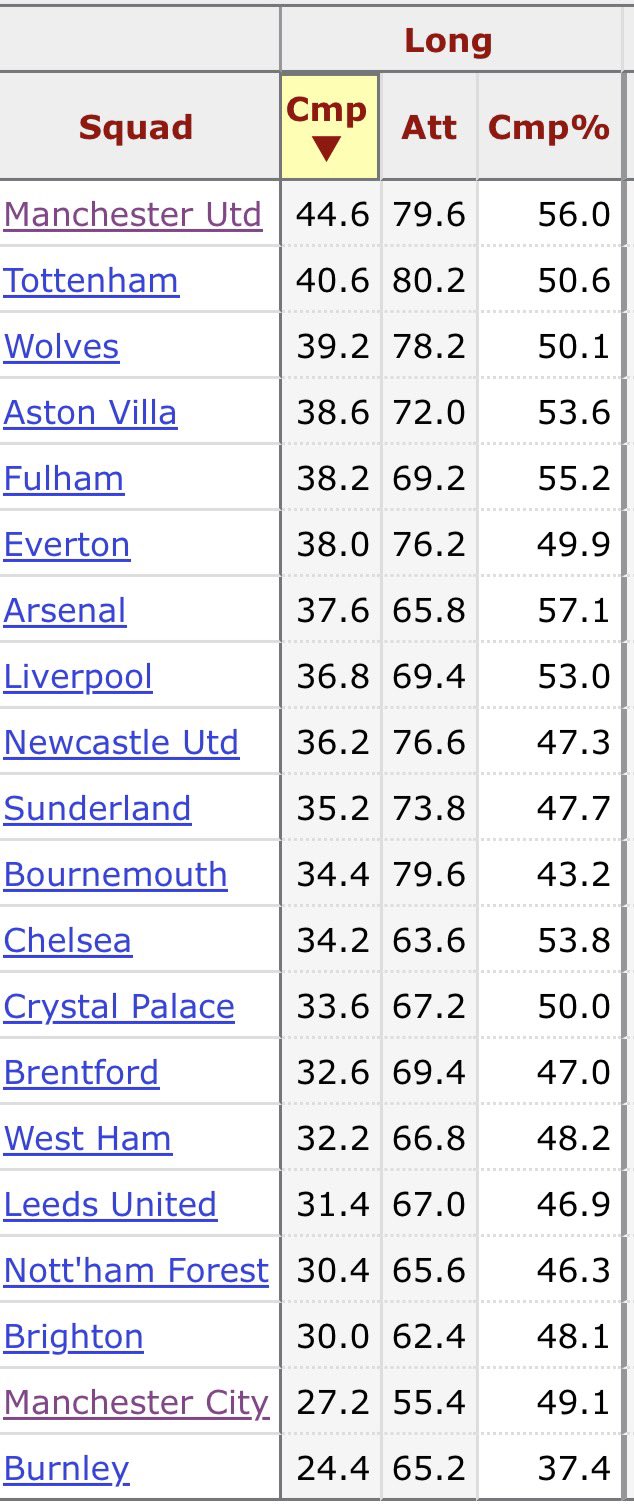
The volume going up + the success rate going up as well clearly indicated this is intentional and not a by-product of top teams pressing us more.
I predicted this might be the intent during the summer, when it became clear new forwards were our primary targets.
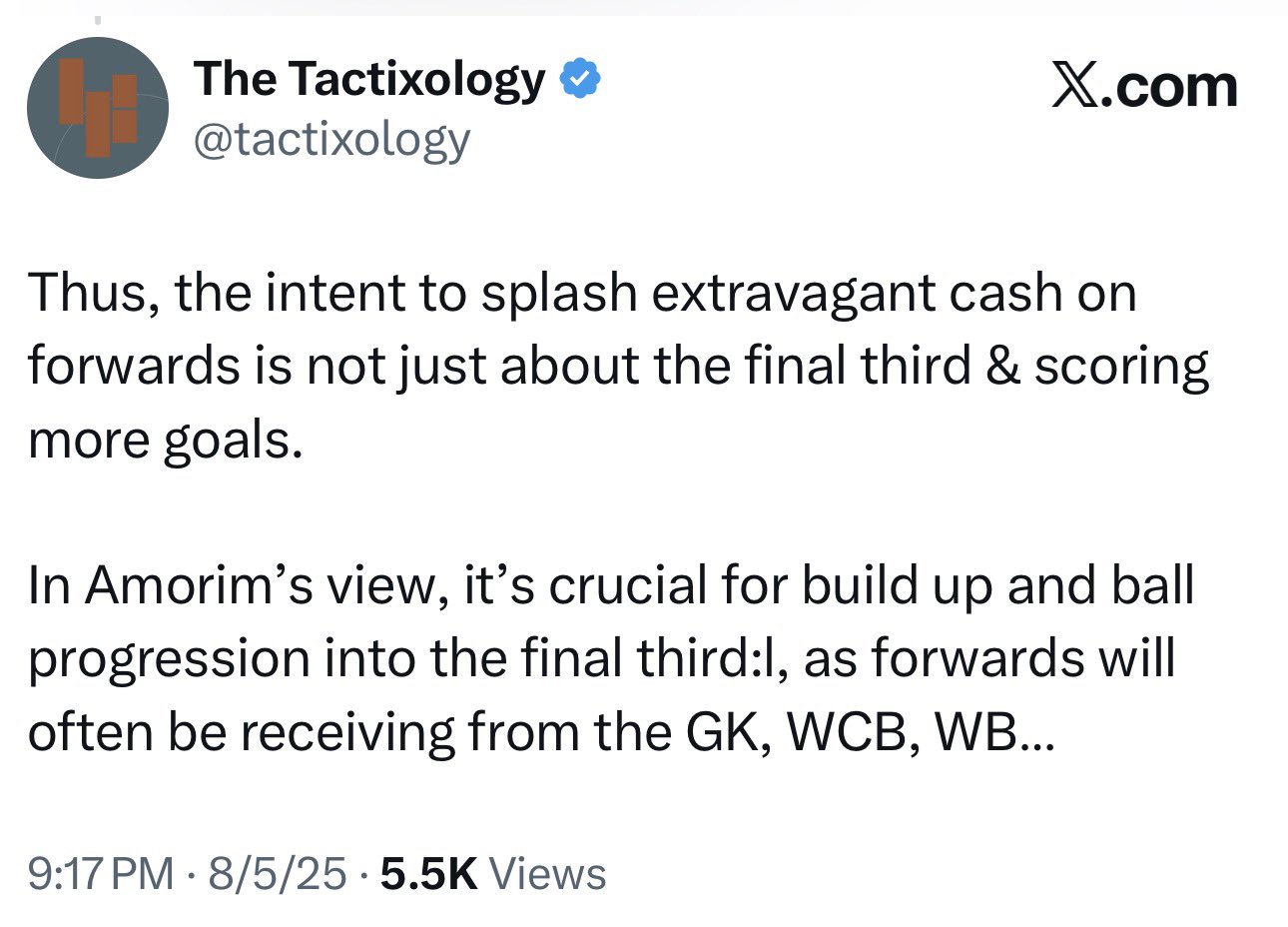
As I wrote back then, new forwards were about build-up as much as they were about finishing.
Amorim wanted 10s who could receive under pressure & stretch defenses, and a CF who could win aerial duels and offer good hold-up and link-up play.
And you can clearly see it in the games. Bayindir passing directly to Cunha for a fantastic chance against Fulham. Sesko flicking it on to Mbeumo, for red card against Chelsea. Bruno pinging diagonal passes. Yoro, Shaw, MDL passing long & up the pitch rather than retaining.
That’s why long passes have gone up by 2x, as % of all passes 📈
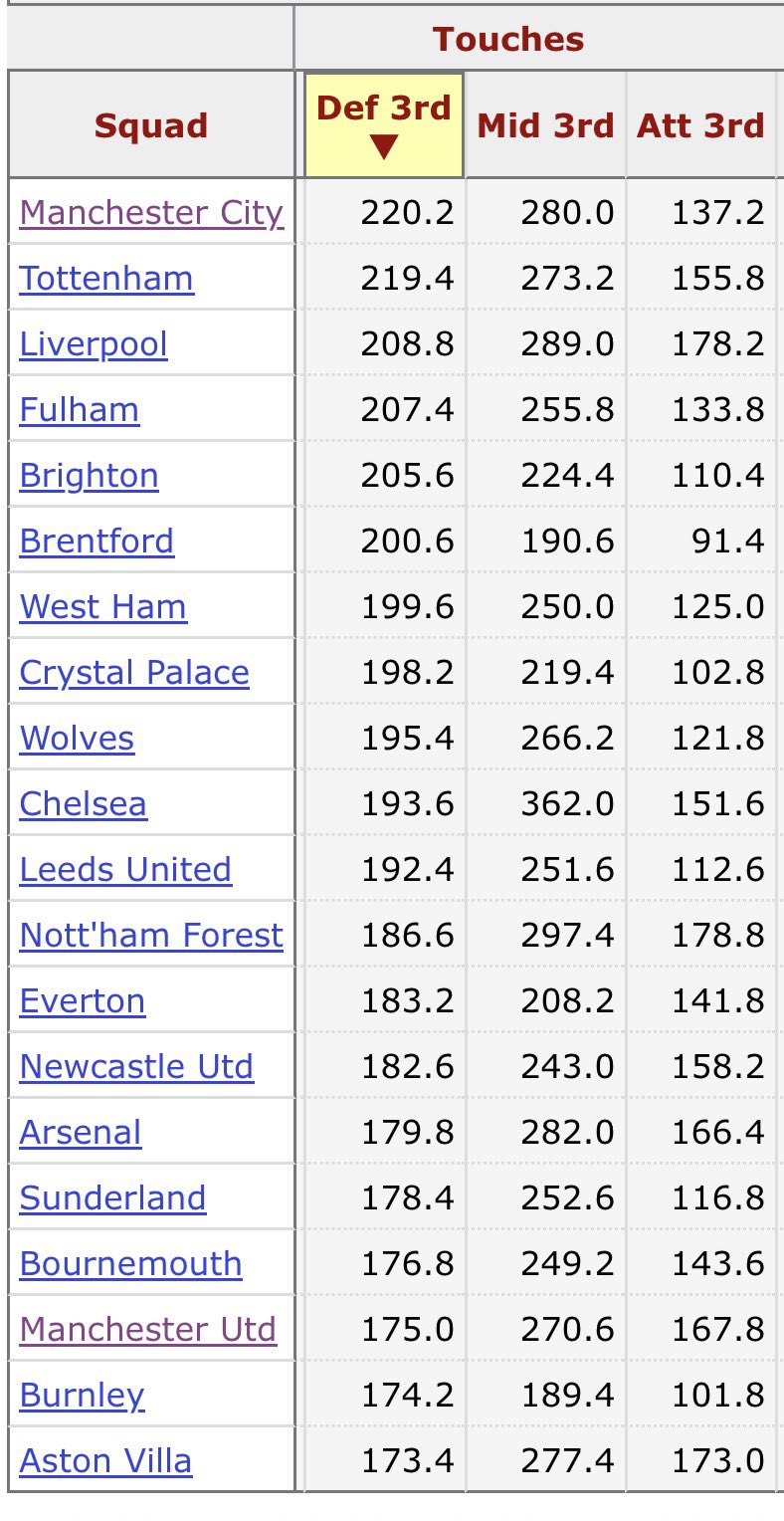
And since we try to go long much more often and sooner than before, touches per 90 in United’s own 3rd went down dramatically:
- 2024/2025: 226.1 (1st in PL)
- 2025/2026: 175 (18th in the PL)
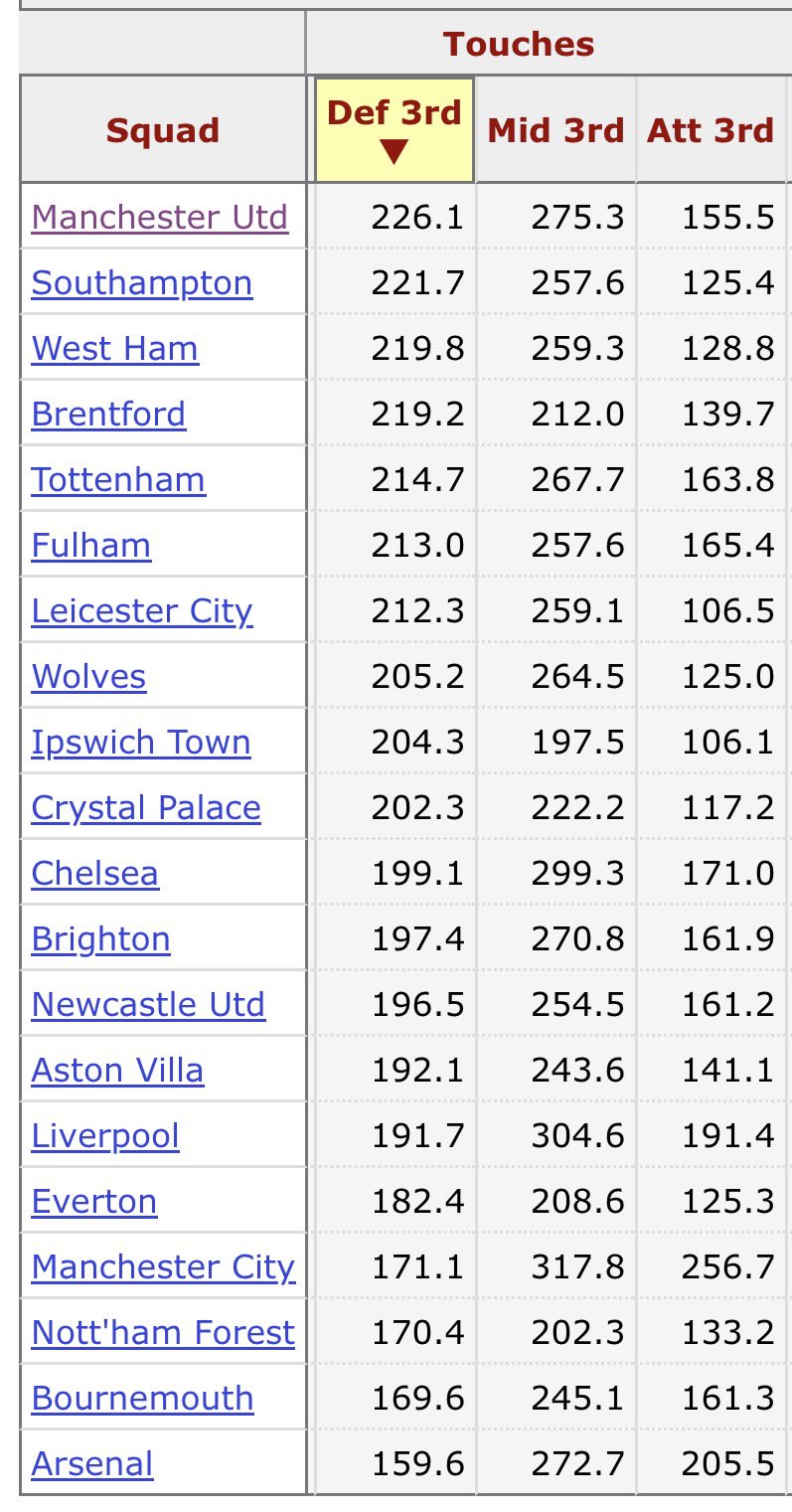
United’s new transitional intent with longer passing and focus on 2nd balls is also reflected in 40% more aerial duels per 90:
- 2024/2025: 25.6
- 2025/2026: 35.4
This new verticality has led to a sharp increase in number of shots, entries and xG per game.
Since those chances come as end products of attacks that consist of long passes, sprints & 2nd ball duels, they don’t lead to many shots on target nor goals.
This is where the questions start. 🤨
- can this work against teams with compact mid and low blocks?
- is it physically sustainable, esp. when paired with our OOP approach?
- can a good m2m press stop 1st phase progression before we go long?
It’s undeniable we managed to progress better and create more. But did we really manage to hurt the top teams we faced?
There were good phases in each game, but it took a red card against Chelsea to record our first win, for a 1W 2L record, with a 2-6 goal difference.
I suspect the real benefit was not getting caught in our own half, during our own build up. This was a major problem for Amorim last season.
Bypassing the press to get into more dangerous areas right away also means not having to deal with turnovers close to own goal.
Was going long just a by-product of facing great teams? Don’t think so, based on games against Fulham and Burnley. And as seen in those games, the physical demads are very high and not sustainable.
Based on Amorim’s recent comments about United being a transitional team, our activity in the market and intent on display so far this season, don’t think this is not only a “big game” tactic.
It’s the general blueprint.
More verticality can be a great thing, especially if it’s controlled and the team understands when to go long. But it needs to be paired with other tools and approaches, like being able to build through midfield, keep the ball in final 3rd and manipulate settled blocks.
If space can be found, great. But space sometimes has to be created. If a team presses high or holds a high line, space is there to be found, if you can find it.
But if a team stays compact, space has to be createe before it can be found.
That’s where United have struggled so far, same as under ETH. It should be noted that ETH also sought more verticality and directness as a solution to many problems. But solutions are rarely as simple.