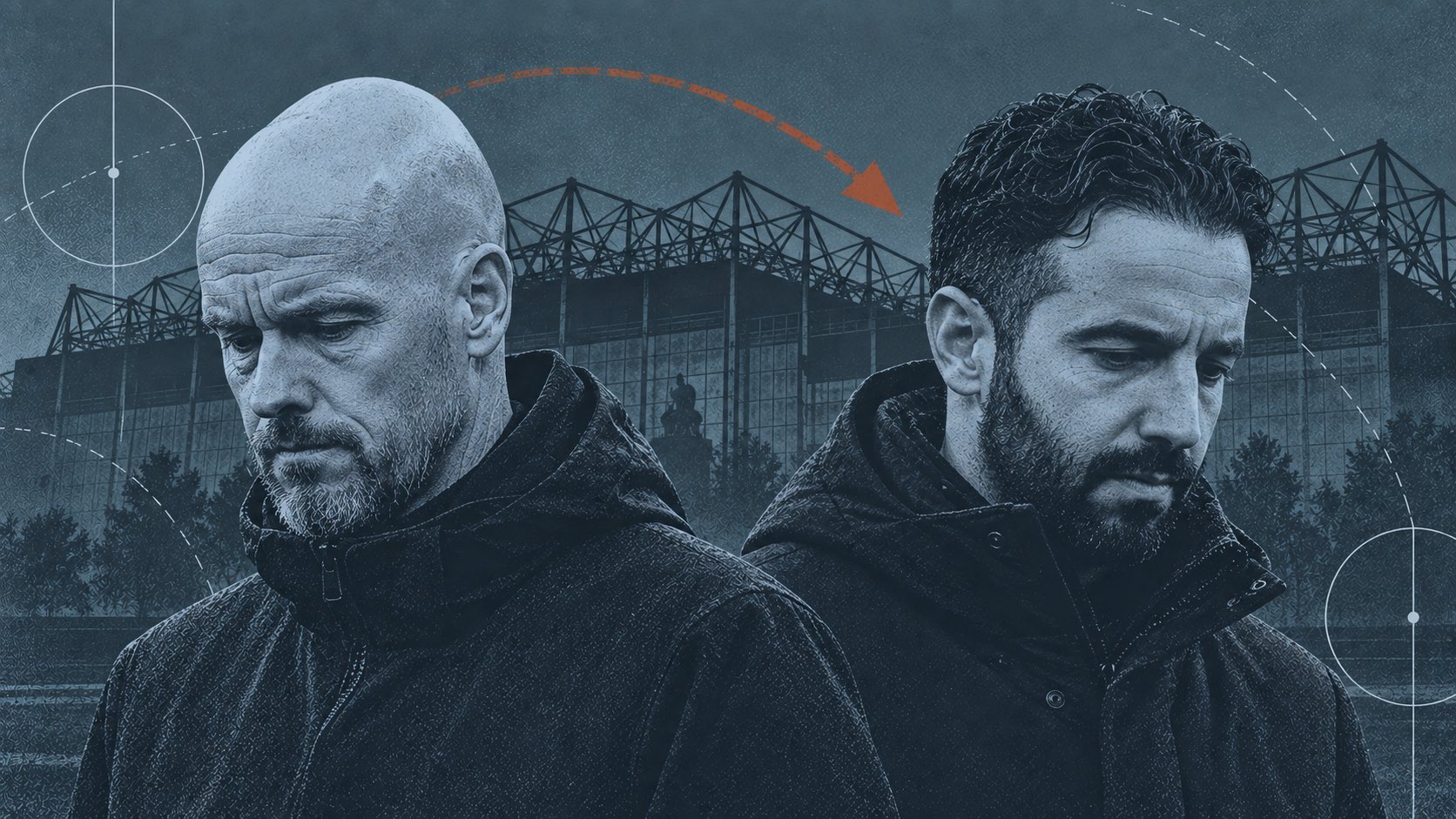
A fundamentally different in-possession ideology has produced familiar output: plenty of entries into the box, few quality chances, and nowhere to run.
The nostalgia for the previous two managers ignores that their problems were ideological, not executional, and that recruitment was built around the same flaws.
19 September 2026
That Carrick is struggling does not mean Amorim or Ten Hag had it right; the pseudo-nostalgic whitewashing is understandable when the club is doing poorly, but really misses the point.
Both Amorim and ETH decided to pursue fundamentally flawed game models, which the club decided to support with fundamentally flawed recruitment models.
Their insistence on progressing directly and attacking without much structure, skipping entire phases and mechanisms used by good teams, were acts of deep insecurity, attempts to get results fast without taking the time to gradually improve all in-possesion phases.
And it sometimes worked - for ETH, it worked for almost an entire season - until opponents figured out they either need to let us have the ball or press us aggressively, to exploit playmaking weaknesses in deep build up.
Their out-of-possession ideas and structures were based on their prior experiences of dominance in lesser leagues, in which the quality gaps were significant and rest defense flaws went unpunished.
These were not matters of poor execution; there were issues of core ideology.
Yes, better personnel would have helped both ETH and Amorim, but fundamental flaws would have still been there, exploited by opponents virtually every week.
Carrick’s basic ideas of controlled build up, short passing & central progression are much closer to how a top team should try to impose control, even if they are lacking specifics, especially in the final 3rd.
His in-game management hasn’t been good, and he’s made a number of unforced errors in team selection, front line composition and out-of-possession structure.
But this notion, lately prominent on social media, that Amorim or ETH dominated games and were somehow unlucky to get poor results is ludicrous.
As is the idea that they were building something of note and needed more time. They were not, and were in fact given much more time than was necessary.
Does Carrick get this right? I’m a skeptic: the pre-season was the right time to implement new ideas and correct things that were not good.
We haven’t seen evidence of this happening. It seems very much like last year, with some minor tweaks & some new players.
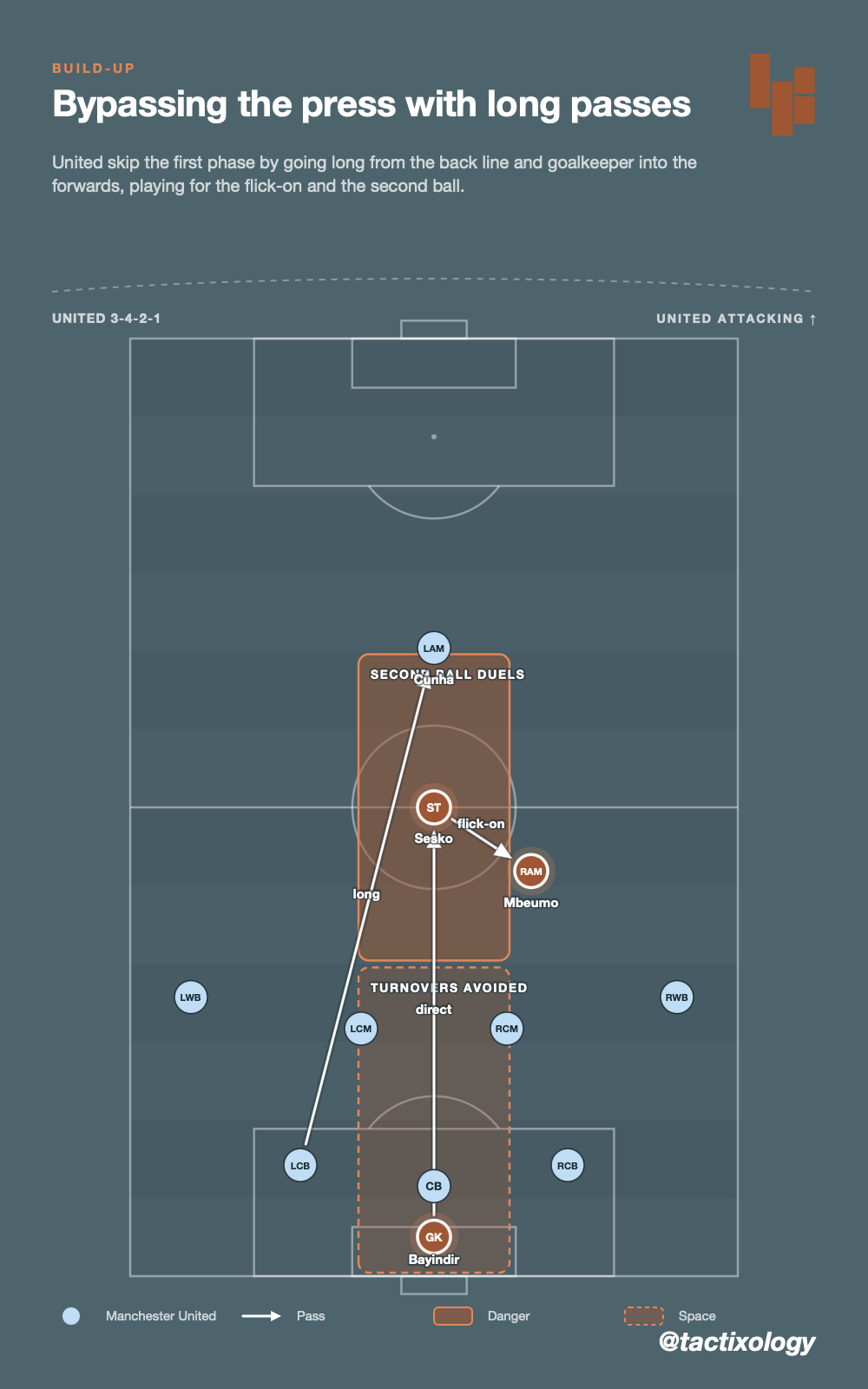
Bought for direct GK to CF progression and duels for long balls, Sesko is now used as a deep passing outlet in an unbalanced team.
17 September 2026
Sesko was truly terrible last nigh, but remember how many people assumed Hojlund was United's primary problem and that buying a better CF - someone like Sesko - would solve everything.
As I warned at the time, to assess Hojlund's performances, we must also consider how he's being used, who he is playing with, what is being asked of him in different stages, who is providing the service.
Sesko is obviously suffering from a mental block, so even simple passes and ordinary decisions are becoming difficult for him.
He's being asked to drop deep and play as a passing outlet, instead of focusing on attacking the last line, going for in-behind runs, occupying the defenders, providing an aerial threat, being there for the final pass.
The team had obvious issues with balance, structure and organization issues way before the ball would reach Sesko. And once it did, it often looked very bad.
Exactly the same thing that happened to Hojlund. In the end, he looked much worse than he was or could have been.
Sure, Sesko should have done better yesterday, but it's not like these players suddenly become poor as soon as they land at Manchester Airport.
He was initially bought for Amorim's direct intent, to help with duels for long balls, crosses and 2nd balls, and enable us to have a direct GK to CF progression, which Amorim decided to add to his in-possession arsenal.
One sequence in the Manchester derby shows how United's best run behind a set City block came from a full-back, while the centre-forward drifted away from the box.
14 September 2026
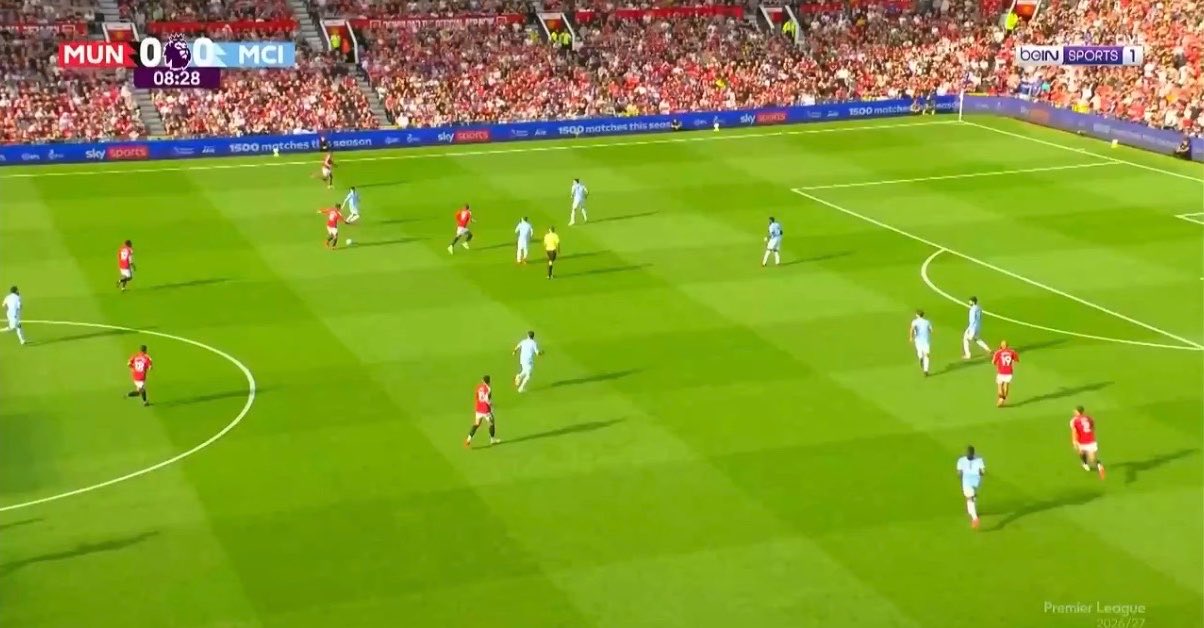
It is 8:28 in the great Manchester derby and United seem to be attacking.
There are 8 City players behind the ball, with 5 of them covering 2 United players in forward positions.
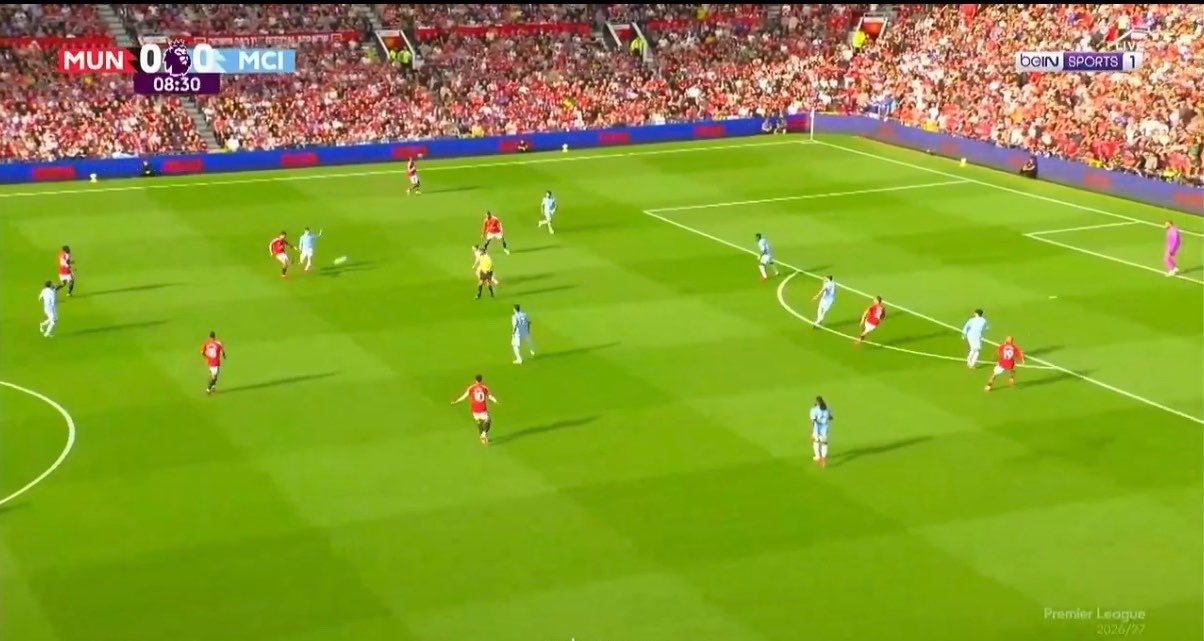
Bruno Fernandes has the ball, with United’s CF Cunha positioned slightly behind Fernandes, jogging and waiting for a pass.
As United’s CF starts running towards the ball, raising his hands, Bruno notices that a player who is not the CF is making a good and unexpected run behind the lines.
He is supported by Mbeumo, who recognizes the run and immediately runs forward to stretch the back line and drag one of the defenders.
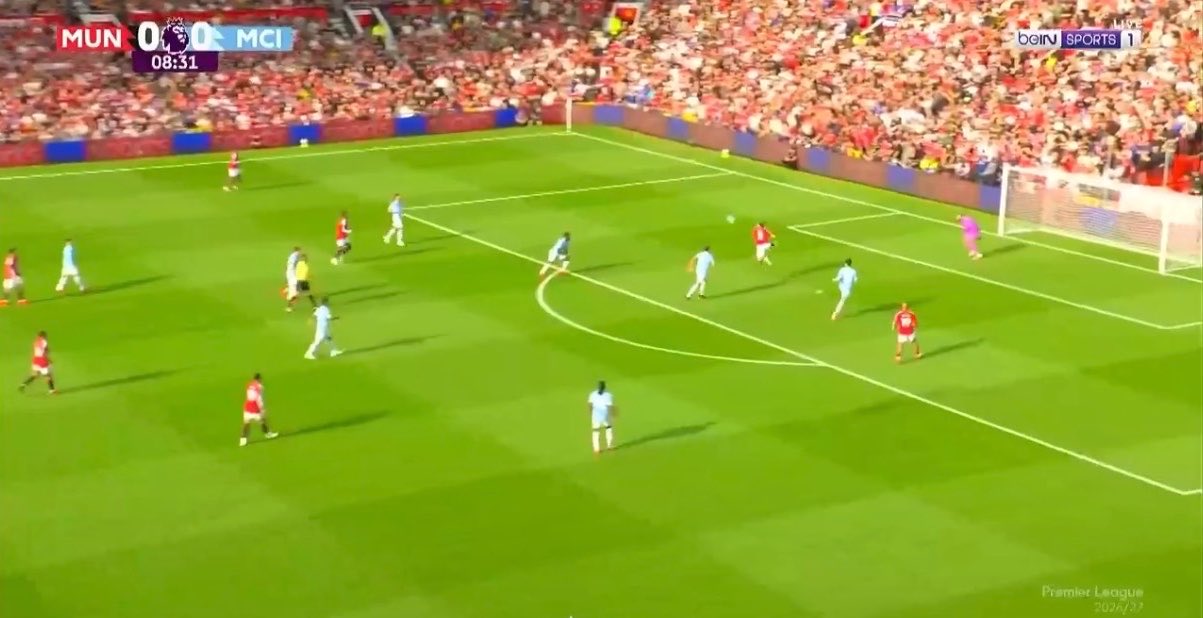
It is now 8:31 in the great Manchester derby.
Unfortunately, the player making the run is Diogo Dalot, an earnest & hard-working FB who, for some reason, has been making runs into central attacking zones for years.
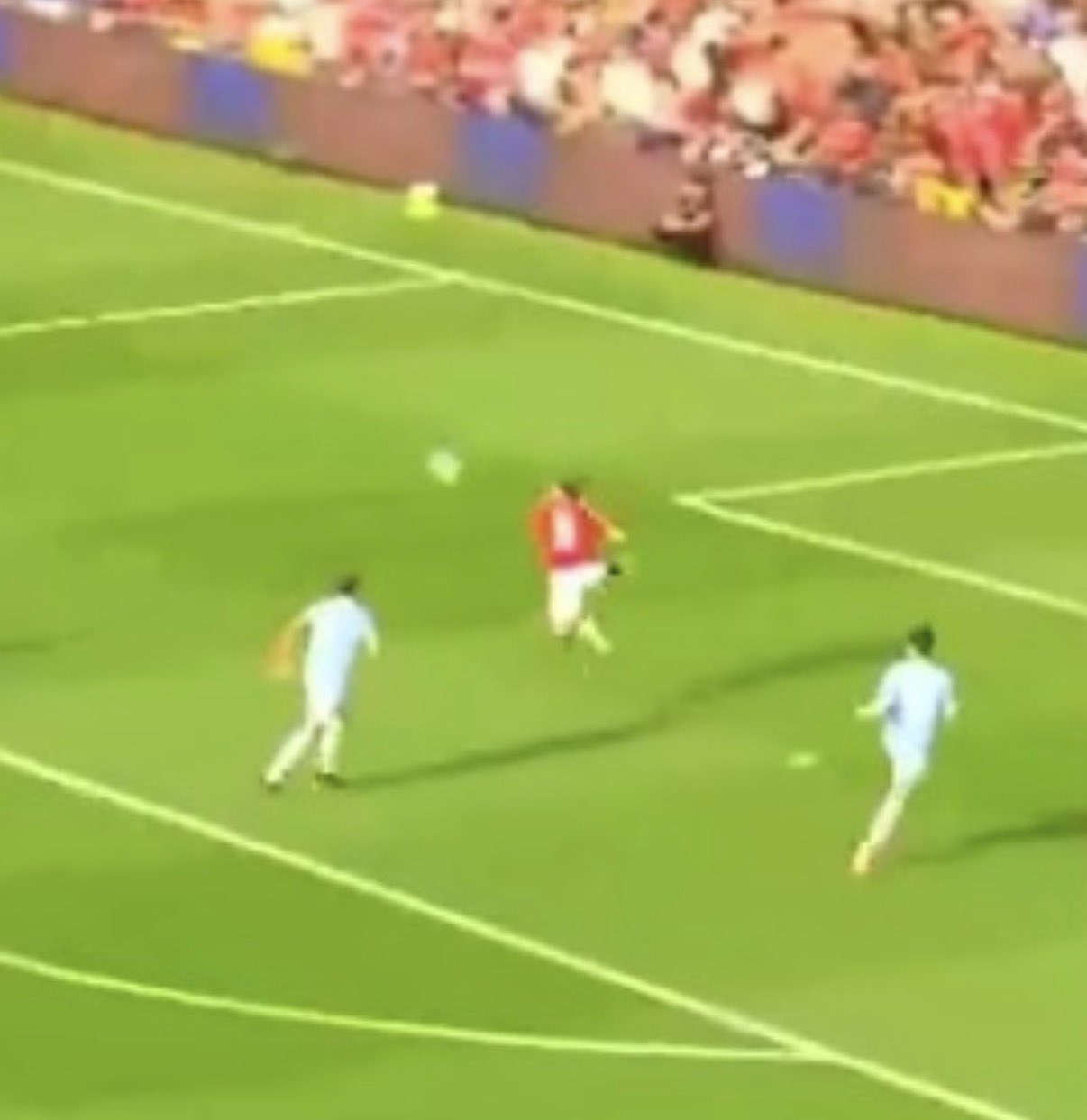
Against all odds, the pass makes it to Dalot, but Dalot fails to make it to the pass.
If he gets a touch, if he manages to control it and place it, it’s probably a goal for United.
But he doesn’t. He never does.
Ever since Eric Ten Hag coached the team, Dalot has been floating in these forward areas, an eternal runner, neither receiving nor scoring.
It is now 8:32 and the chance is wasted. United’s CF never got close to the box.
Carrick’s in-possession ideology is detailed in the first two phases and deliberately loose in the final third; the worry is out of possession.
13 September 2026
As often is the case, recent United debates are difficult to wage because they seem to conflate basic terms and ideas: ideology with solutions; principles with mechanisms; strategy with tactics.
My take: Carrick has a clear in-posession ideology, principles of play, for all 3 phases. That ideology is supplemented by a host of specific solutions for the first 2 phases, but gets much less defined once the team progresses the ball into the final third.
In the final third, it’s much more about general roles and specific players used in those roles. This, I think, is by design, not a lack thereof.
The idea seems dynamism and Carrick’s version of fluidity, i.e. to give the players a general attacking paradigm, a broad framework, without stiffling their creativity and unpredictability. It’s not the caricature of “let the boys cook, come what may”, but it’s not positionally rigid nor based on automatisms, either.
What follows is that a lot of United’s final 3rd play ends up being defined by player traits and natural inclinations, more than anything else. To a lesser extent, this is visible in other phases as well; in the final 3rd, though, it seems to be the core intent.
This final 3rd approach represents a throwback to a previous era, but in this new transitional context of the PL, with few teams sitting deep and just waiting it out, it might not be as rudimentary nor crazy as it seems.
When it clicks, it looks fluid and unstopabble, but when it doesn’t, it can be chaotic and impotent, players getting in the way of other players, lack of width and depth, lack of bodies up front etc.
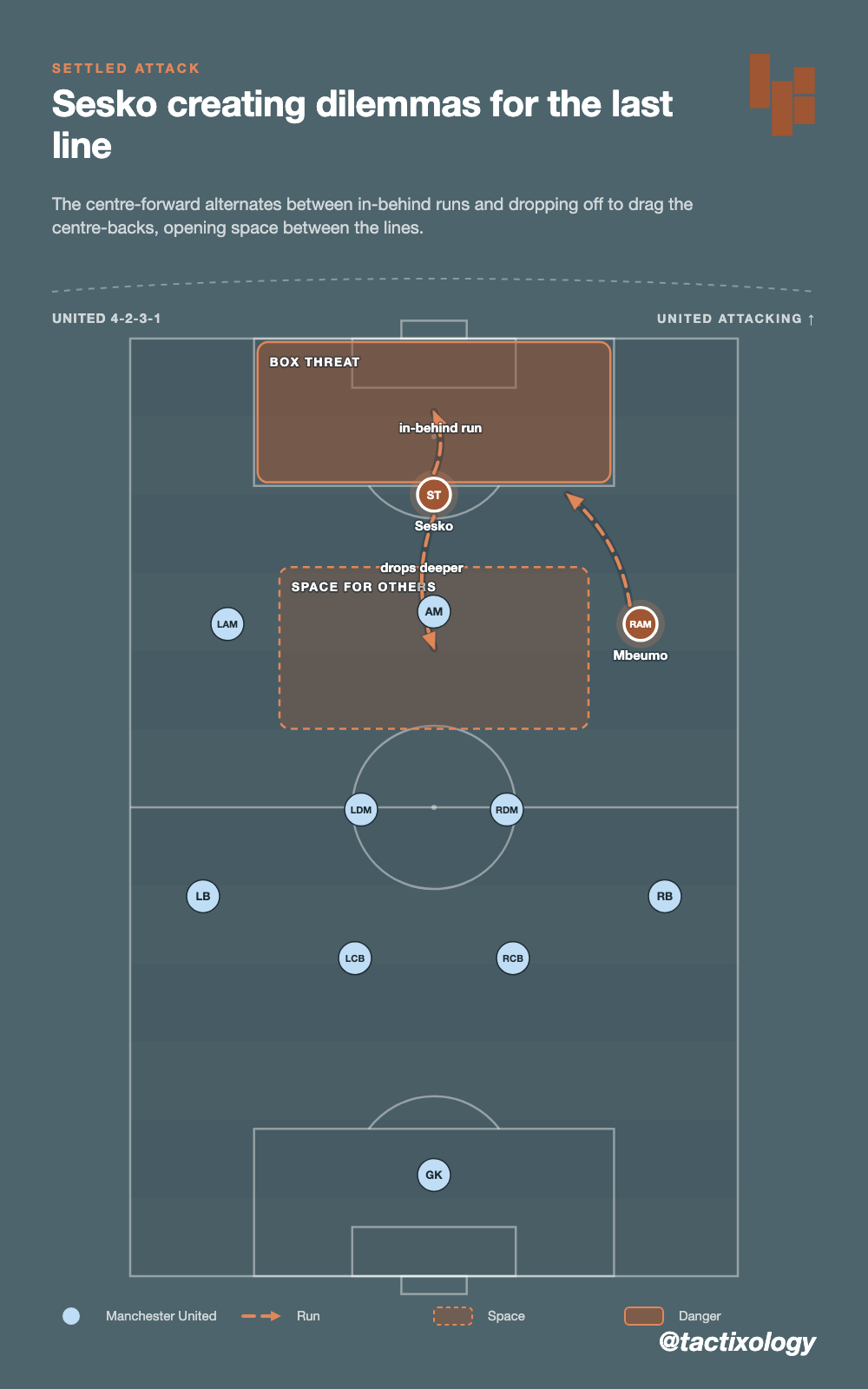
Sesko is a good example: he is a true CF, meaning that he applies pressure to the last line, stretches and occupies the CBs, looks for in-behind runs, provides a serious box threat, but also drops deeper from time to time, to drag the CBs and create more space for others. In other words, he creates dilemmas for the back lines, as does Mbeumo.
The centre-forward alternates between in-behind runs and dropping off to drag the centre-backs, opening space between the lines.
When Cunha operates up front, it often results in him being too deep too often, which means opposition defenders have much less to worry about. He’s not a credible aerial threat, and his natural instict is to run towards the ball and carry it, not to look for pockets of space to run into. The advantage is that he can drop deep and form a playmaking quartet of Mainoo, Tielemans, Bruno and himself, but the cons of that outweight the pros.
I think Carrick will get the in-possession balance right, most of the time, especially once Amad gets back. Will that be enough for a top 4 finish? I’m uncertain - as the team develops, I do think more structure will be needed.
It’s the out of possession stuff that I’m more worried about. The general principle of combining zonal & m2m pressing is correct, but the execution has been subpar, to say the least.
Again, the basic ideology is there, but the specific solutions are neither abundant nor excellent. And without the ball, you really need specific solutions and structure; allowing player instincts to take over out of possession is a recipe for disaster.
With the tactical era that shaped two decades now fading, sporting heads and managers are far less certain about which direction to build their squads in.
29 August 2026
Seems to me it’s underestimated how chaotic & all over the place the recruitment efforts of most top PL clubs have been over the past few years. And, crucially, why this is.
My theory is that, as the broad Pep paradigm starting giving way to a new era - an era which is yet to be defined - the sporting heads and managers started being less certain about what to do and how to strenghten their squads.
By the Pep paradigm, I don’t mean just his initial theorem of IP & OOP control through possession & high pressing.
I also mean numerous trends, styles and solutions that became popular in response to his model: gegenpressing -> deep buildup & baiting -> M2M / hybrid marking -> direct attacks.
Basically, Pep’s ideas with Barca, Bayern & City were so successful, that they inspired a number of counter-meassures, copies & improvements.
The recent trend of more directness & less possession in the PL might be the end of the previous paradigm, or it might be an interim phase, or it might be the start of something new.
We’ll know soon enough.
But since things are less clear than they have been for almost two decades now, top clubs - the ones that seek to be at the cutting edge - seems less sure about how to respond & in which direction to develop their teams.
This is also why I think Arsenal has been ahead of the curve, with Arteta modifiying his initial model to become a well-drilled team capable of many different approaches and solutions.
Both arrived from the Eredivisie, both succeeded by profiling their best players, and both were undone once they moved towards their actual models.
31 May 2026
Arne Slot’s tenure unraveled just as Erik Ten Hag’s did.
The parallels between the two men are clear - and though one should seek to avoid the trap of banal generalization, in this case the similarities are apparent & logical.
Both Slot and ETH moved to the PL from the Eresivisie. Both enjoyed great success in their domestic league, hailed for results and playing style, restoring stability and titles to their respective club.
In the PL, during their 1st seasons, ETH and Slot adapted their approach and decided to be cautious & pragmatic.
Instead of immediately remaking their teams to move towards their true vision, they largely focused on profiling & platforming their best players.
This conservative approach brought them success, especially so for Slot.
Interestingly, both used forward outlets with reduced OOP duties & higher starting positions during transitions - Rashford as the left forward, Salah as the right forward.
This mix of excellent profiling, simple but effective in-possession solutions, player quality and tiny tricks to minimize OOP issues proved to be quite potent.
Looking back, it was always going to be short-lived, masking how problematic the underlying ideas would turn out to be.
Even during their best periods, there were defensive issues at United & Liverpool that materially increased as Slot and ETH moved to implement their actual models in their 2nd seasons.
And once they got closer to how they actually wanted to play, things started falling apart, especially so for ETH. The defensive issues in particular became overwhelming.
It would be too trivial to write them off as two arrogant Dutch managers who failed to adapt to the PL. They are both good coaches who built serious careers prior to coming to England.
And therein, I think, lies the issue: what made them so good in the Eredivisie also made them very vulnerable in the PL.
You can get away with certain OOP gaps in a league like that. The quality gap is too large. But the more you get away with it, the more you become reluctant to accept they are even there.
The results justify continuity, but without tactical knowledge and authority above the manager, United risk repeating the ETH and Amorim pattern.
19 April 2026
With Carrick vastly outperforming all reasonable expections in terms of results, but with his system also showing undisputable tactical gaps, United face a complicated choice.
Stick with Carrick, convinced things will improve with more time and more suitable players, or look for a big managerial upgrade, the sort of which might not be available this summer. The issue with going with Carrick is that:
1) United don’t seem to have deep tactical knowledge in their sporting department, people with real authority who could work with Carrick, e.g. on a plan to fix pressing next season. Is Wilcox supposed to be doing that?
2) the failure to address systematic issues then usually leads to the club trying to overcompensate by building for that manager in a frantic fashion, impeding long-term squad development (see: ETH, RA, etc)
What ends up happening is the club spending too much on players and profiles that have dubious potential, while also neglecting and not investing enough in key areas, regardless of who the manager is. Not saying it will happen with Carrick.
But I’ve always maintained United need much more tactical knowledge and authority in all club areas, to be able to support - and, crucially, challenge - the manager.
What we’ve seen in recent years is an attempt to support managers with smarter recruitment and better operational execution.
But we’re yet to see United provide the context and knowledge for managers to adapt, grow, develop and overcome. Tactical issues that ETH and RA had, evident for months, largely went unresolved.
It’s been too much of “let the coach figure it out”, waiting for a divine intervnetion, instead of “this needs to be dealt with, let’s come up with a reasonable plan of action”.
The club should aim for a more modern, hollistic approach, to completely allign different departments and stop yearning for a miracle-man to take care of it all.
The issue with the 2nd approach - going for someone else - is clear.
Carrick has done so well thus far that it would represent a serious gamble to ditch him, unless the club executives are absolutely certain they are bringing an upgrade. But, alas - who makes that call?
In my opinion, the club will decide to keep Carrick this summer, give him a slightly shorter deal than usual (2 seasons), and try to build for a possession-heavy approach that he favors and the executives prefer.
The turnaround he’s been overseeing is simply too great to ignore. That being said, I do think the club also need to work out a long-term tactical plan with Carrick, to make sure mistakes made with recent managerial hires are not repeated.
Three pragmatic changes — direct progression from the goalkeeper, Amad restored at right wing-back, and a more compact out-of-possession shape.
26 October 2025
After the Brentford defeat, Amorim managed to implement a number of pragmatic tweaks to his system; and to his credit, they seem to be working well
What changed, specifically?
A new progression method
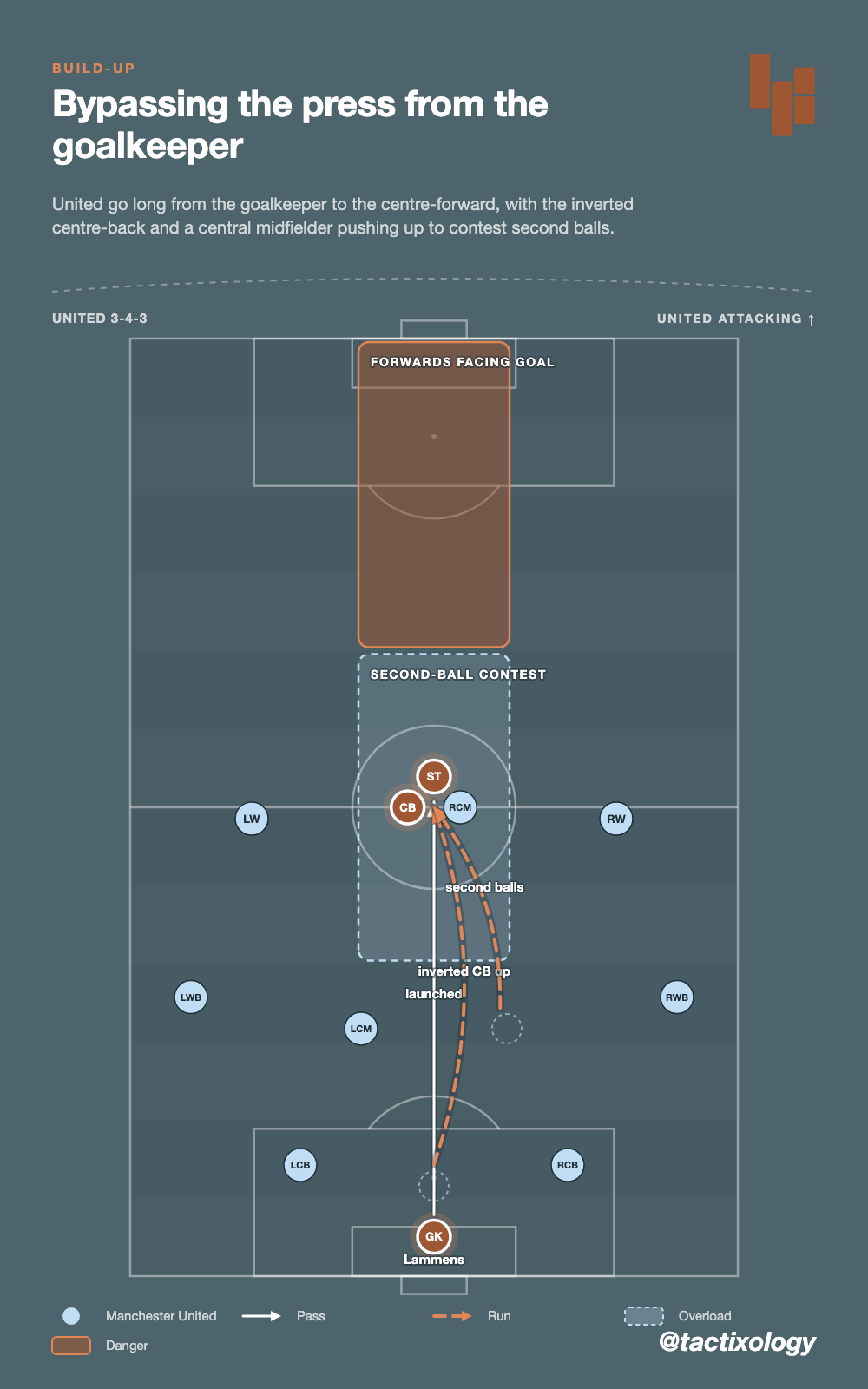
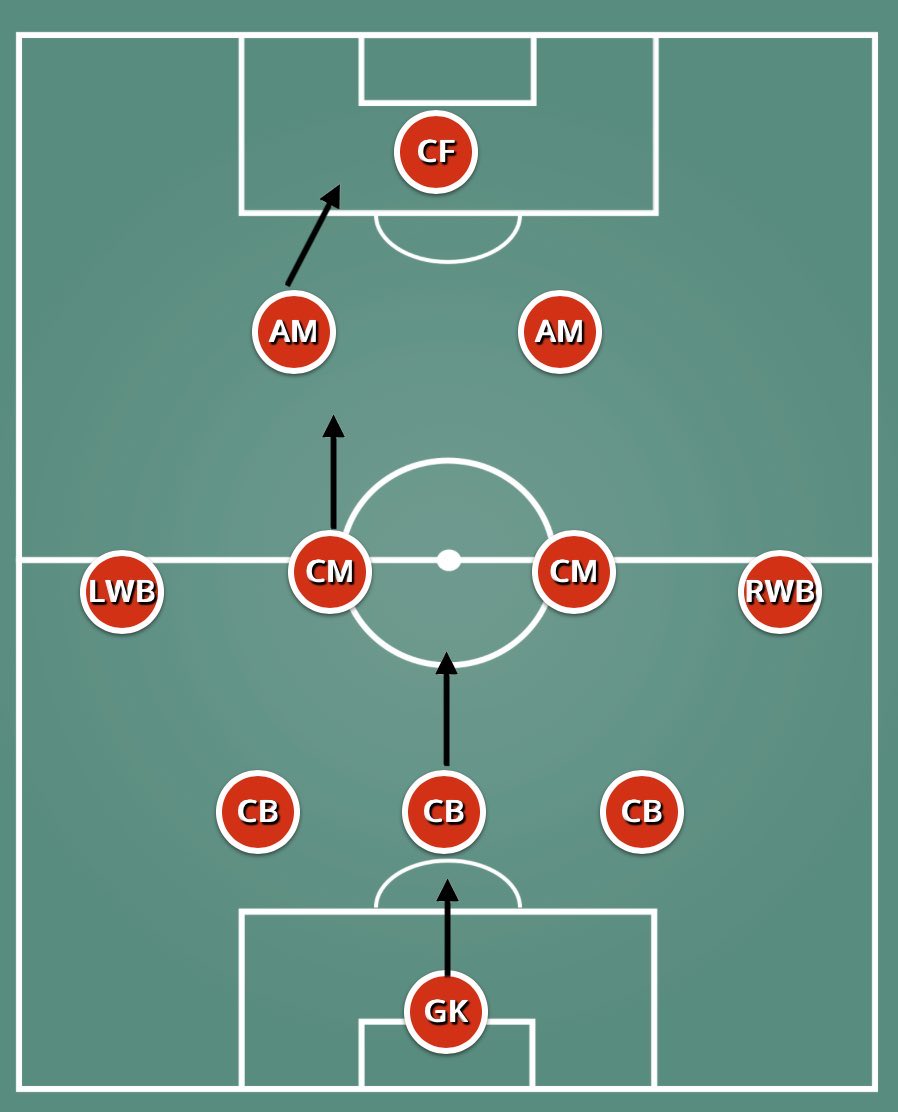
By introducing Lammens into the team, we also introduced going long from GK to forwards much more often.
Percentage of goal kicks launched: - 33% vs Brentford - 87.5% in post-Brentford games - 75% vs Brighton
Same thing for open-play passes by GK, in terms of short vs long: 41.7% launched vs Brentford, then 75% in the 3 games after that.
What is even more interesting is that we are involving the GK more than before, to launch those long passes.
Passes attempted by GK: - 24 vs Brentford - 36 in post-Brentford games (avg.) - 41 vs Brighton
Of course, as dicussed previously, relatively few of these end up as successful long passes, claimed by the player they were meant for.
But that’s not the point: the point is for the team to be positioned well as the pass is made, to duel for 2nd balls and counterpress if ball is lost.
United bypass the first and second phases of possession by going long from the goalkeeper, with the inverted centre-back and a central midfielder pushing up to contest second balls.
What has this change led to?
Basically, bypassing the first and second phases of possession - and the opposition’s press - to quickly transfer play up front.
From Amorim’s view, this has 2 advantages: a) limiting the dangers faced vs m2m pressing and b) getting our most dangerous players close to the goal and facing the goal.
Percentage of touches in final 3rd: - 15% vs Brentford - 24% in post-Brentford games - 28.8% vs Brighton
This massive increase of 89% between Brentford and Brighton means that United are spending much more time where they should be - in front of the goal.
This direct threat should ease the willigness of opposition teams to press us high, in a m2m system, because they will fear getting caught in the back.
Amorim must use this fact to re- introduce short build up and press baiting: a combo of these two basic strategies could prove unstopabble.
But if we end up over-exploiting one method, teams will find a way to stop us.
Side note: funnily enough, inverting the CCB works much better with this long, direct strategy rather than short build up.
The CCB moves up, which means one of the CM can move up, too, to better challenge for second balls.
Amad back at right wing-back
A change that seems to have gone slightly under the radar is the return of Amad as our primary RWB option.
Started as one of the AMs against Grimsby, Chelsea and City + missing the Brentford game had a massive, underappreciated negative impact.
Simply said, Amad is the only true WB option we have on that side. Without him, we remain too flat and passive,
This was the case last season as well: when a FB was played there, our progressive carrying & final 3rd play suffered greatly.
Progressive carries per game: - Amad: 5.45 - Mazraoui: 1.55
Successful take-ons per game: - Amad: 2.08 - Mazraoui: 0.79
And most importantly for our new progression method, Amad ventures into forward areas much more and is able to receive there.
Prog. passes received per game: - Amad: 8.88 - Mazraoui: 2.34
Amad has been back as the starting WB in the past 3 games, and it shows - especially as the connection with Mbeumo improves.
In a 3-4-3, the 10s will always be a challenge for the opponents. But much more so if they are flanked by proactive, progressive WBs.
Out of possession and the 5-2-3
This one is of pivotal importance, but still imperfect.
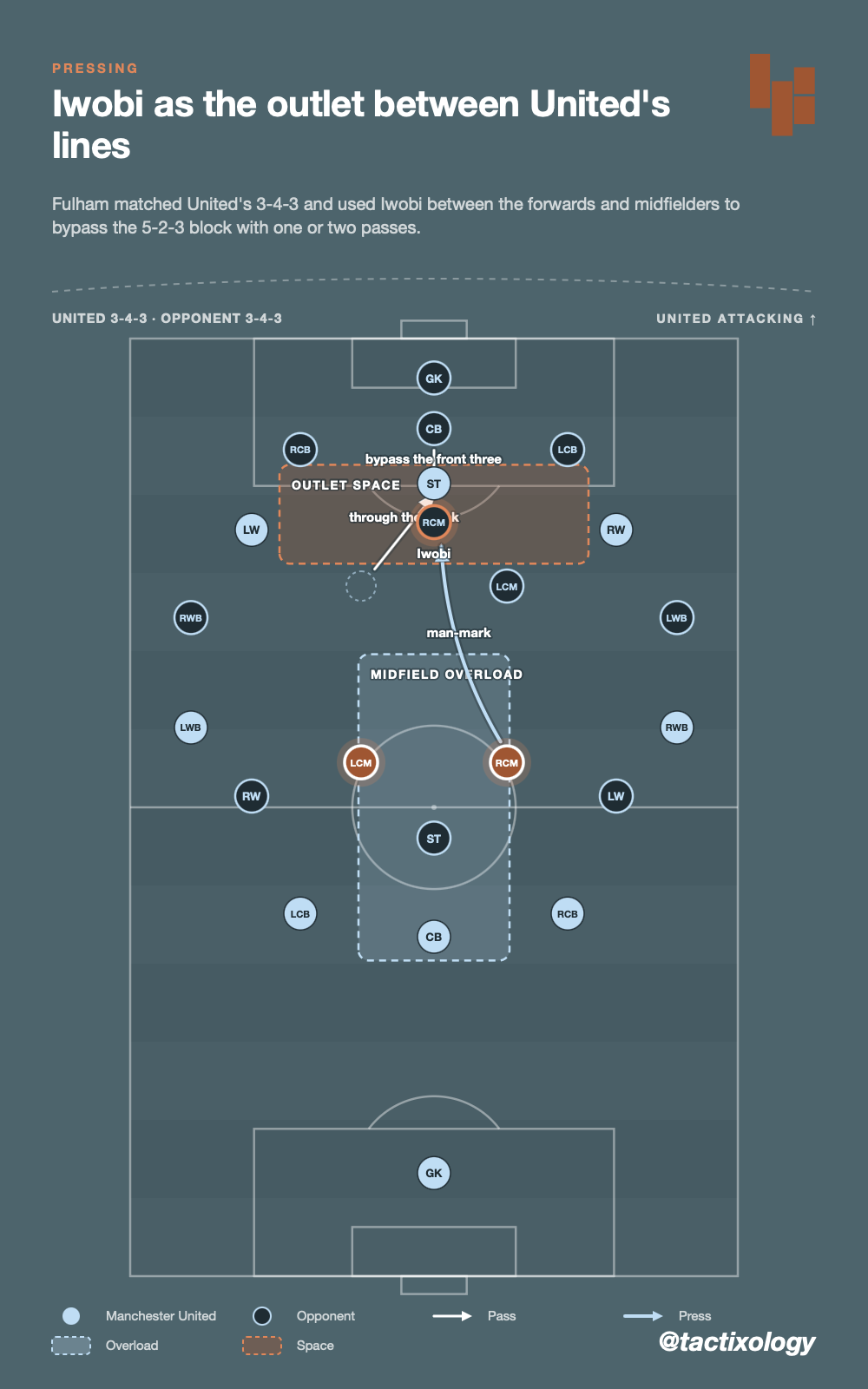
First of all, we stopped pressing high with only three forwards, leaving major gaps between our front and midfield units.
Now it’s usually either 5-4-1 or 4-4-2 (at times against Brighton, even seemed like 4-1-4-1 or a 4-2-4 block). And was often man to man.
Crucially, the back line is much more active, timing their jumps well to support the midfield.
The result of these two changes - one of structure, the other of coaching - is that we have become more compact in central areas.
There’s still space to exploit and more works is needed, but it looks significantly improved and much more aggressive. See Zohair’s excellent thread below:
What the changes add up to
The changes Amorim introduced are not groundbreaking; they are common sense changes. Which is precisely what makes them good.
Platforming your best players well and keeping things efficient & simple worked great for ETH in his 1st season, for example.
I see a lot of posts implying that Amorim didn’t need to change a thing in order to win. That it was all about player quality, mentality, etc.
This is only true if you think the formation = the system. He kept the basic formation, sure, but changed a lot of systematic things.
For example, in posession, United have gone from lots of retention in 1st phase & attempts to progress through wide overloads, to going direct from CBs to AMs, to going long and direct from the GK to the CF.
That’s a lot of tweaks since last season.
The very fact Amorim adapted - and adapted with success - gives hope for the future more than any single change introduced.
Now, can we keep this going? I’m more optimistic after Brighton than I was after Sunderland and Liverpool.
It was a more complete and mature performance, not as hectic and random as Anfield seemed at times.
A good warning to heed would be ETH’s aforementioned 1st season.
He made pragmatic tweaks and got excellent results. But as opposition adapted, we lost momentum and fell apart completely in 2nd season.
The step up to a more progressive system never happened.
Amorin deserves serious credit for introducing major changes to his system, boosting the physical levels of the squad and keep it together during a terrible run of results.
But he would be wise to think ahead and not let opponents catch up too soon.